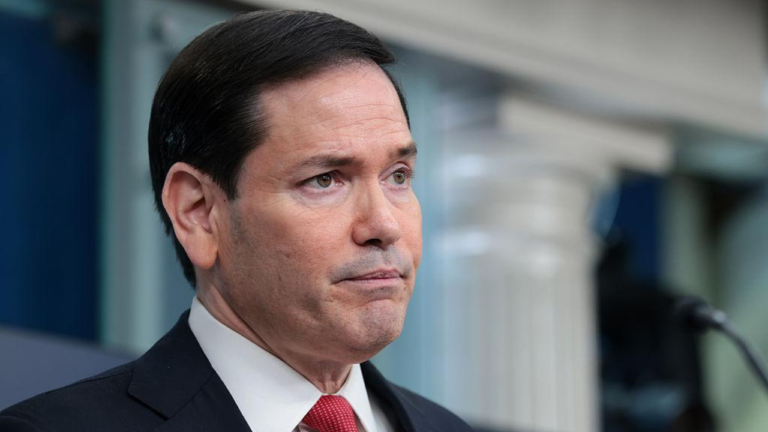
Secretary of State Marco Rubio is at the center of a new round of speculation about possible departures from President Donald Trump’s administration following the Republican Party’s midterm election defeats.
An explosive report from Britain’s The Independent describes expectations among sources in Washington and the British government that Rubio could leave his position as he considers his political future and a potential campaign for the Republican presidential nomination in 2028.
The report also raises the possibility that several other senior administration officials could depart.
But the White House is pushing back forcefully, rejecting the account and disputing suggestions that Rubio is preparing to resign.
The competing claims have created a new political controversy at a time when the administration is already facing intense scrutiny over the war with Iran and the results of the November 3 elections.
According to The Independent, some sources believe Rubio has a powerful political reason to consider leaving: distancing himself from a conflict that has become a source of criticism for the administration.
One senior official offered a particularly direct explanation of the calculation Rubio might face.
He needs to “distance himself from the Iran war and pin that one on Trump,” the official said, according to the report.
That assessment is the source’s interpretation of Rubio’s possible political strategy. It is not evidence that Rubio has adopted such a plan or decided to leave the administration.
Nevertheless, the suggestion highlights the political difficulties facing senior officials whose future ambitions could depend on how voters assess the Trump administration’s record.
Rubio has played a central role in the administration’s foreign policy, serving as secretary of state and national security adviser.
His responsibilities have placed him close to some of the administration’s most consequential decisions, including its approach to Iran.
That proximity could complicate any attempt to present himself as politically independent of the president in a future campaign.
The report suggests that Rubio is not the only official whose future is being discussed.
Another Republican source predicted that several senior figures could leave the administration following the midterm elections.
“There will be about four or five of them running for the hills,” the source said.
The source added:
“The country has completely turned against Trump.”
Those remarks reflect one Republican’s assessment of the political climate rather than a confirmed list of departing officials or a comprehensive measurement of national public opinion.
No four or five resignations were established by the report.
Still, the prediction has drawn attention because of the scale of the electoral setbacks and the possibility that senior administration officials may be considering their political futures.
For Rubio, the situation carries an additional complication: the 2028 presidential election.
The former Florida senator has long been associated with presidential ambitions, having competed against Trump for the Republican nomination in 2016.
During that campaign, Trump famously mocked him as “Little Marco,” turning their rivalry into one of the most memorable personal disputes of the Republican primary.
Rubio later became an important member of Trump’s second administration.
His elevation to secretary of state and national security adviser represented a dramatic political evolution from his earlier role as a presidential rival.
But according to the new reporting, some insiders believe Rubio may eventually face another competition with a prominent figure from the same administration.
That figure is Vice President JD Vance.
The report describes a possible contest between Rubio and Vance for the 2028 Republican nomination.
It also relays claims from insiders that Rubio is already better positioned than Vance in the emerging competition.
Those claims are political assessments attributed to sources, not established polling results or evidence that either man has formally launched a presidential campaign.
Neither a Rubio candidacy nor a departure from the administration has been confirmed.
The speculation nevertheless raises a familiar question for officials serving under a president whose term is approaching its final years: whether remaining in government helps or complicates their future political ambitions.
For Rubio, the war with Iran could be a particularly important part of that calculation.
The conflict has generated disputes over its objectives, costs and consequences.
Critics have questioned the administration’s military strategy and its handling of the economic and diplomatic fallout.
The administration has defended its decisions as necessary to protect American national security interests.
Rubio’s senior foreign-policy responsibilities mean that his record would likely be examined closely in any future presidential campaign, whether he remains in office or eventually resigns.
But the central claim of the Independent report remains unconfirmed.
The White House dismissed the allegations as “baseless, false conspiracy theories.”
That response represents a categorical rejection of the reporting rather than a partial acknowledgment of the suggested departure plans.
The report also included accounts that complicate the narrative of an imminent resignation.
One administration official reportedly had not observed indications that Rubio intended to leave.
Another source suggested that he could decide to remain in government to help maintain stability during a difficult period.
Those differing assessments are important because they show that even among the sources cited in the reporting, there is no established consensus about Rubio’s intentions.
The secretary of state has not publicly announced a resignation or formally declared a campaign for president.
There has also been no confirmed announcement that several other Cabinet officials are preparing to depart.
What the report does establish is that Rubio’s future has become the subject of discussion among political sources following the midterm elections.
It also shows how questions about the Iran war and the next presidential election are becoming intertwined with speculation about personnel decisions inside the administration.
Trump’s political relationship with Rubio adds another layer to the story.
The two men moved from a bitter presidential primary rivalry to a working relationship in which Rubio assumed some of the administration’s most prominent national security responsibilities.
Whether that relationship continues through the remainder of Trump’s term remains an open question.
For now, Rubio remains secretary of state.
The White House disputes the suggestion that he is preparing to leave.
And the dramatic prediction that multiple officials could be “running for the hills” remains an anonymous source’s forecast, not an announced exodus.
But the report has placed a new spotlight on the administration’s internal political calculations, its handling of the Iran conflict and the potential ambitions of officials looking toward 2028.
The immediate question is whether any of the reported discussions will lead to a concrete decision.
Until then, the resignation rumors remain exactly that: reported expectations and speculation, met with an emphatic official denial.
About the Author