Donald Trump’s Justice Department has suffered a significant courtroom defeat just weeks before the November midterm elections, after a federal judge struck down a nationwide policy designed to collect state voter records, screen them against a federal immigration database, and identify people for possible removal from voter rolls.
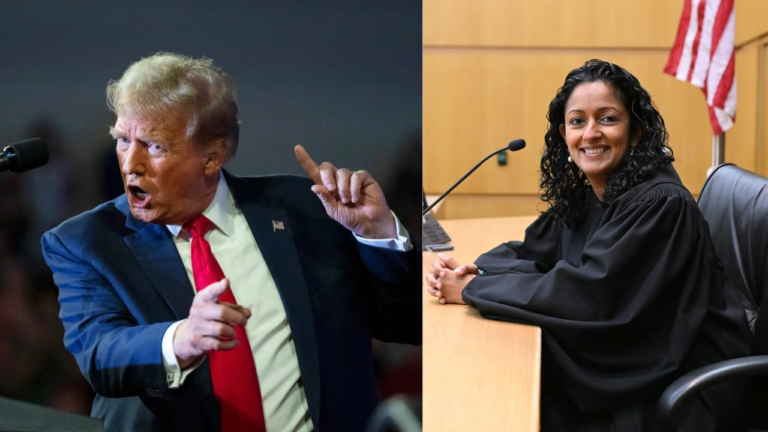
The ruling, issued Friday by U.S. District Judge Sparkle Sooknanan in Washington, D.C., represents a major setback for the administration’s effort to expand federal involvement in elections traditionally administered by the states.
And the judge did not mince words.
In her sweeping 78-page opinion, Sooknanan wrote that the Justice Department “cannot run roughshod over longstanding laws that were carefully crafted to protect the rights of the American people.”
At the center of the controversy is the administration’s Voter List Maintenance Policy, which sought extensive voter registration records from states, including personal information not ordinarily available to the public.
The Justice Department intended to compare those records against a federal immigration verification system known as SAVE, using the results to identify individuals it believed were not eligible to vote.
The administration argued that the initiative was necessary to enforce federal election laws and prevent noncitizens from voting.
But the court found serious problems with both the government’s legal authority and the risks its approach posed to eligible American voters.
One particularly troubling issue was the reliability of the SAVE database itself.
Citizenship records can become outdated, especially when immigrants become naturalized American citizens. If those records are not properly updated, an eligible voter can be mistakenly identified as a noncitizen.
That concern was not merely theoretical. The court considered evidence that American citizens had already been removed from voter rolls after inaccurate citizenship information was used.
For a naturalized citizen who has completed every legal requirement to become an American, the consequences of such an error can be severe: the possibility of losing access to the ballot despite having the same voting rights as any other eligible citizen.
The judge concluded that the Justice Department had minimized those risks while attempting to exercise authority that Congress had not granted it.
Her opinion also challenged the fundamental premise behind the federal government’s involvement.
“Behind all the window dressing, the challenged policy represents the federal government’s attempt to decide who gets to vote,” Sooknanan wrote.
She emphasized that Congress had left the responsibility for maintaining voter rolls with the states, consistent with the country’s constitutional framework for administering elections.
That distinction matters.
The federal government can enforce voting-rights laws and support lawful efforts to maintain accurate registration records. But those responsibilities do not automatically authorize the Justice Department to collect sensitive voter information nationwide and direct states to remove individuals based on potentially unreliable federal records.
The administration’s initiative was already extensive.
According to court records cited in reporting on the case, 18 Republican-led states had been cooperating with the Justice Department, while numerous other states resisted demands for their voter information.
The department pursued litigation against states that refused to comply, turning the dispute into a broader confrontation over federal authority, voter privacy, and election administration.
Reuters reported that the Justice Department had lost 26 of 30 related lawsuits, underscoring the legal resistance the initiative had encountered.
Friday’s ruling addressed the underlying policy itself.
The court granted partial summary judgment to the voting-rights organization Common Cause and vacated the Justice Department’s Voter List Maintenance Policy.
That is an important distinction: the judge did not simply criticize how the department was implementing the initiative. She set aside the policy after concluding that it violated applicable legal requirements.
The timing adds to the significance of the decision.
Americans are preparing for the November 3 midterm elections, with control of Congress at stake. Questions about who can vote, how registration records are maintained, and which level of government has authority over those decisions carry immediate practical consequences.
Trump has repeatedly argued that noncitizen voting presents a serious threat to American elections, despite research showing that such voting is rare.
His administration has defended expanded citizenship verification as a necessary safeguard against unlawful participation.
Voting-rights advocates, meanwhile, have warned that broad database-matching efforts can produce false positives, particularly among naturalized citizens whose federal records may not reflect their current citizenship status.
The court’s decision gives substantial legal weight to those concerns without suggesting that states must abandon legitimate voter-list maintenance.
Indeed, Sooknanan expressly stated that her ruling does not prohibit lawful federal assistance or prevent states from maintaining accurate voter rolls.
Nor does it resolve every legal dispute surrounding the SAVE system. In a separate case, the Supreme Court temporarily paused an earlier ruling that restricted the administration’s expanded use of that database.
The legal battles over election administration are therefore far from finished.
But Friday’s decision establishes a clear limit on the Justice Department policy challenged by Common Cause.
It also presents a striking contrast between the administration’s stated goal of protecting election integrity and the court’s findings about the dangers of its chosen approach.
The administration sought to identify people it believed should not be voting. The court found that the methods it adopted could instead jeopardize the voting rights of American citizens who were legally entitled to participate.
And with Election Day approaching, that distinction is more than a technical legal argument.
For eligible voters, an inaccurate government database can mean the difference between casting a ballot without difficulty and facing an unexpected challenge to their registration.
For state election officials, the decision reinforces the legal boundaries governing who controls voter records and how those records may be used.
For the Justice Department, it means a nationwide policy developed as part of Trump’s election agenda has been invalidated by a federal court.
The administration may continue to pursue its objectives through other lawful avenues or further litigation. But the ruling leaves one central conclusion unmistakable: protecting election integrity does not give the federal government unlimited authority over the people who are entitled to vote.
And just weeks before Americans return to the polls, a federal judge has made clear that the government’s obligation to protect the ballot includes protecting eligible citizens from being wrongly removed from it.
About the Author