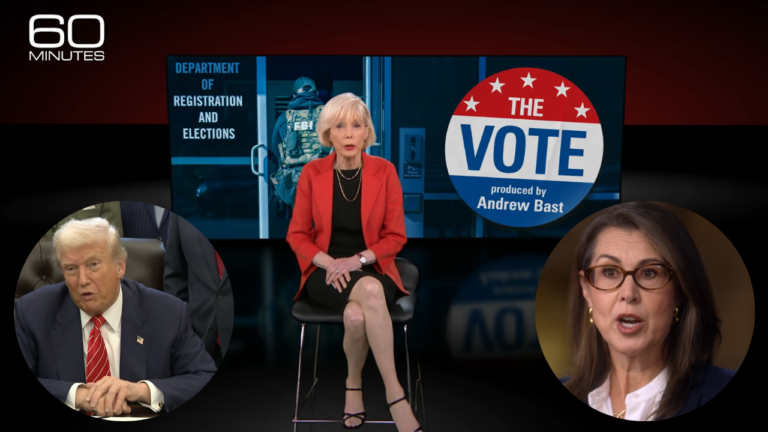
Lesley Stahl isn’t backing away from uncomfortable questions.
Just days after reports of a bruising behind-the-scenes confrontation with CBS News editor-in-chief Bari Weiss, the veteran 60 Minutes correspondent delivered a hard-hitting investigation into Donald Trump’s growing pressure on the officials responsible for running American elections.
And some of the most alarming criticism came not from Democrats, but from a Republican election official who says she is now under federal investigation for refusing to surrender confidential voter information.
Utah Lieutenant Governor Deidre Henderson told Stahl that the threats facing election administrators have changed dramatically.
For years, she said, officials worried about foreign interference, cybersecurity attacks and other outside threats. Now they are confronting pressure from Washington itself.
“But now we also have threats coming from within our own government,” Henderson said.
Stahl pressed her on whether she meant the federal government. Henderson confirmed that she did.
It was a remarkable warning from a Republican in a state Trump carried comfortably — and it became one of the defining moments of Sunday’s broadcast.
Henderson oversees elections in Utah. She told 60 Minutes that the Justice Department demanded access to voter registration records containing sensitive personal information, including Social Security numbers, birth dates and driver’s license numbers.
She refused, questioning both the legal basis for the request and what federal officials intended to do with the data.
The Trump administration argues that access to voter rolls is necessary to identify noncitizens who are improperly registered. But Henderson’s review found only 52 questionable records among more than two million registered voters in Utah.
Other Republican and Democratic election officials have also resisted the demands, prompting lawsuits from the Justice Department.
The consequences for Henderson have become personal. She received notice that she was under investigation, while administration officials have warned that election administrators could face prosecution if they knowingly permit illegal voting.
Asked how she could withstand that pressure, Henderson told Stahl she believed someone had to defend the safeguards protecting the election system.
The report then turned to Georgia, where federal agents entered a Fulton County election facility in January and seized more than 600 boxes of materials from the 2020 election.
Democratic County Commissioner Dana Barrett described arriving to find armed FBI agents carrying out a court-authorized search.
The warrant gave agents legal authority to seize the records. But Barrett questioned the purpose of reopening allegations about an election that had already been investigated repeatedly.
She told Stahl that local officials still did not know where the seized materials had been taken.
CBS also obtained an internal FBI email showing that 260 analysts had been temporarily reassigned to an investigation involving the Georgia election records.
For Barrett, the concern extended beyond the search itself. Repeated investigations, she argued, can leave voters believing something must be wrong even when previous inquiries have failed to establish the widespread fraud Trump alleges.
Stahl then confronted Assistant Attorney General Harmeet Dhillon, who leads the Justice Department’s Civil Rights Division and has defended the administration’s aggressive scrutiny of voter registration records.
Dhillon insisted the department was responding to genuine concerns about election integrity and investigating potential illegal voting.
Stahl challenged her on the scale of the problem, noting that documented noncitizen voting remains rare.
Dhillon said investigators were examining thousands of possible cases. That assertion does not establish that thousands of people have illegally voted.
The exchange became even more pointed when Stahl asked whether the administration intended to send immigration enforcement officers to polling places.
“There is no plan to do that,” Dhillon replied.
She also dismissed fears that Trump might challenge the midterm results as paranoia, while declining to guarantee that no unexpected circumstances could disrupt the normal certification process.
The investigation aired amid a separate controversy inside CBS News.
According to reporting by the media newsletter Status, Stahl recently clashed with Weiss and other editors over a 60 Minutes segment examining violence by Israeli settlers against Palestinians in the West Bank.
The editorial dispute reportedly became contentious enough that Stahl privately discussed leaving the program.
CBS strongly disputed that characterization, insisting the segment received normal editorial scrutiny and rejecting suggestions that Stahl had nearly resigned. The report ultimately aired.
There is no established evidence that Weiss tried to suppress Stahl’s investigation into Trump’s election policies. The two stories concern separate editorial matters.
Still, the timing is striking.
At a moment when the network’s editorial independence is under scrutiny, one of its longest-serving journalists has put a Republican administration’s use of federal power under a harsh spotlight — with a Republican official providing one of the most memorable warnings.
And with the midterms approaching, the questions Stahl raised are hardly academic.
The Trump administration says it is protecting elections from illegal voting. State and local officials say its demands, investigations and threats of prosecution are putting unprecedented pressure on the people who actually run them.
For voters, the central issue is whether the federal government is strengthening confidence in elections — or undermining it before the first ballots are counted.
Stahl’s report offered a disturbing reason to ask that question: Some of the officials sounding the alarm belong to the president’s own party.
About the Author