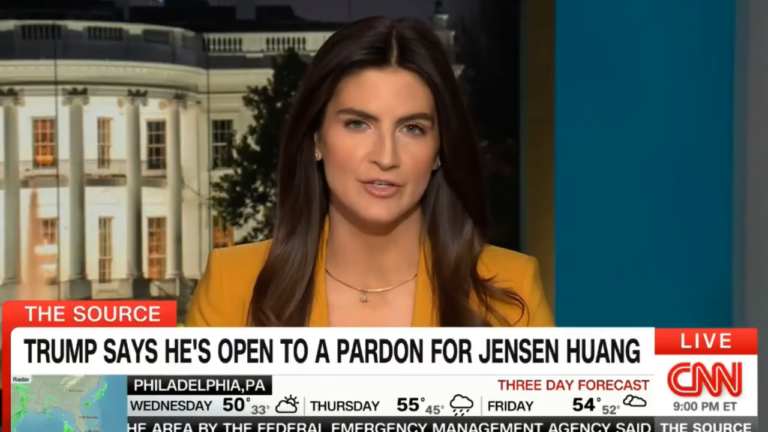
CNN anchor Kaitlan Collins highlighted an apparent contradiction in the Trump administration’s explanation of Nvidia CEO Jensen Huang’s controversial reinstatement during Tuesday night’s episode of The Source.
The discrepancy emerged after President Donald Trump indicated that he would be open to granting Huang a presidential pardon, despite previously claiming that federal authorities had cleared the executive of wrongdoing.
Huang returned to Nvidia just 11 days after stepping down amid reports of an affair with a woman suspected of having connections to Chinese intelligence.
Trump subsequently took credit for encouraging Nvidia’s board of directors to reinstate him.
When asked by the New York Post whether he would consider pardoning Huang, Trump responded:
“It’s always an option, I guess, but I don’t think it’ll be necessary.”
Collins contrasted that remark with the president’s earlier assurances concerning Huang’s legal situation.
During a CNBC interview on November 23, Trump claimed that government officials had conducted an investigation and concluded that Huang was exonerated.
He also stated on Truth Social that Attorney General Todd Blanche had confirmed that the government possessed no evidence of unlawful conduct by the Nvidia executive.
But Collins then turned to footage from Blanche’s Tuesday press conference, where reporters attempted to determine whether the Justice Department had actually investigated Huang.
When asked directly about a potential investigation, Blanche responded:
“For what? I don’t understand the question.”
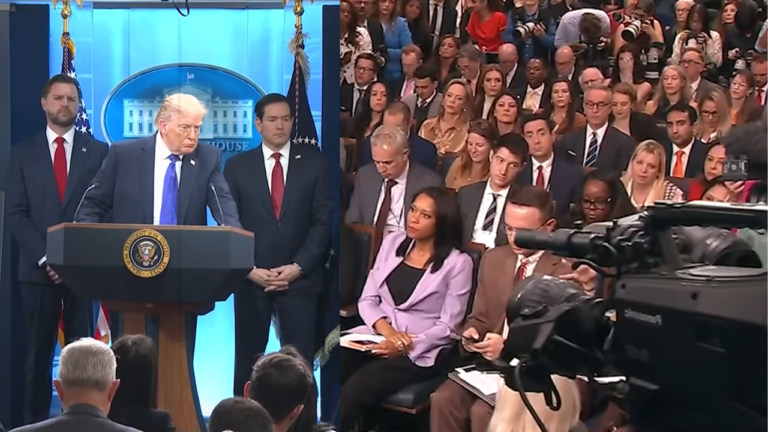
The attorney general explained that Trump had consulted several individuals before encouraging Nvidia’s board to reinstate Huang. However, he declined to discuss his private communications with the president or confirm that Huang had personally been investigated.
The distinction was central to Collins’ reporting.
Trump had described an investigation that resulted in Huang’s exoneration, while his attorney general would not confirm that such an investigation had taken place.
Reuters subsequently reported that federal authorities had not opened a formal criminal or counterintelligence investigation into Huang before his reinstatement.
Instead, Blanche’s assessment was informed by existing investigations involving companies that purchased Nvidia’s technology.
Those investigations had reportedly uncovered no evidence that Huang knowingly facilitated illegal exports or represented a national security threat.
Meanwhile, Trump’s involvement in Huang’s reinstatement has attracted additional scrutiny because of his reported financial holdings in Nvidia and the company’s substantial contribution to his White House ballroom project.
The increase in Nvidia’s stock price following Huang’s return could have benefited Trump’s investment portfolio, although that does not establish that financial gain motivated his intervention.
Huang is expected to face congressional questioning next week concerning the circumstances surrounding the controversy.
For now, no criminal charges against Huang have been announced, and no presidential pardon has been granted.
But the question highlighted by Collins remains: why is the president publicly discussing a potential pardon for an executive he insists has already been cleared of wrongdoing?
SOURCES
Mandatory · The Daily Beast · OK! Magazine · Reuters · CNN
About the Author