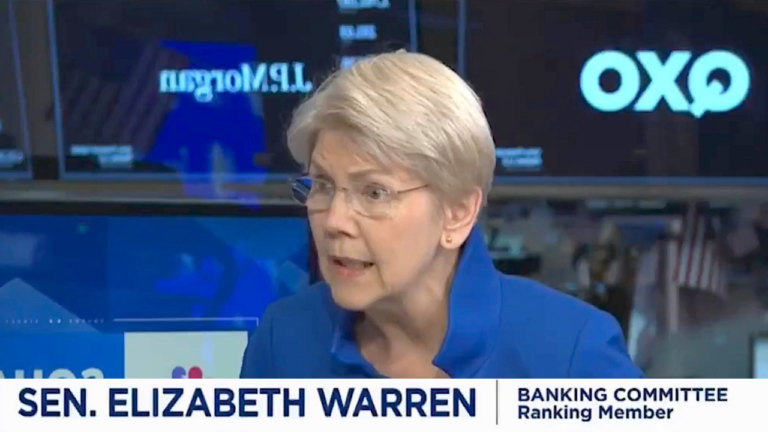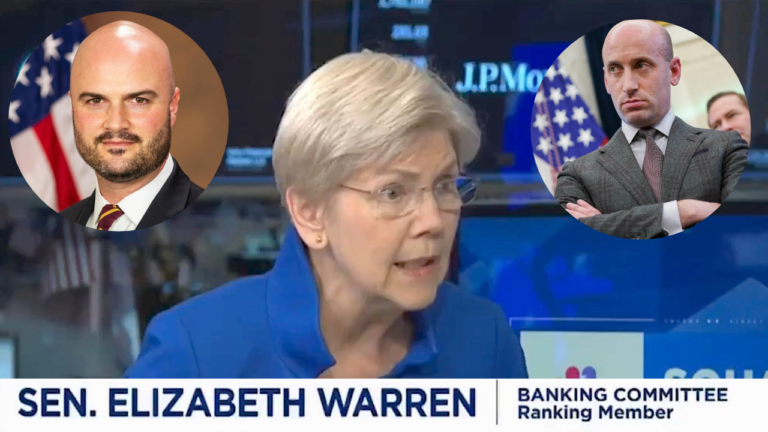
Senator Elizabeth Warren is facing an unusual warning from a federal prosecutor as she prepares to assume leadership of the Senate Banking Committee, setting up a confrontation over congressional oversight and the constitutional rights of individuals associated with President Donald Trump.
On Sunday, November 15, U.S. Attorney Aaron Reitz, who leads the Southern District of Texas, publicly released a two-page letter challenging Warren’s plans to investigate wealthy executives, corporations and individuals connected to the president.
Reitz accused the Massachusetts Democrat of potentially using congressional investigative powers to target private citizens because of their political associations.
The letter cited two federal criminal civil-rights statutes, 18 U.S.C. Sections 241 and 242, which address conspiracies against constitutional rights and deprivation of rights under color of law.
Although the letter did not establish that Warren had committed a crime or announce criminal charges, it raised the possibility of legal consequences if congressional investigations were used to punish people for exercising their constitutional rights.
Reitz also demanded that Warren and individuals working on her behalf preserve documents, electronic communications and other records relating to her planned investigations.
He set a deadline of 6 p.m. Eastern Time on November 23 for written confirmation that the records had been preserved.
But the legal warning was not the only controversial element.
Reitz used references to Native American imagery in describing Warren’s anticipated congressional oversight.
In the letter, he compared her future use of a committee gavel to a tomahawk and referred to hunting for the scalps of Trump’s associates. He also used the phrase “smoke signal” when discussing her intentions.
Those references echoed longstanding political attacks involving Warren’s disputed claims of Native American ancestry, which Trump himself has repeatedly used against the senator.
The letter quickly attracted additional attention when White House Chief of Staff Stephen Miller shared it on social media.
Miller’s amplification brought the confrontation directly into the orbit of the president’s senior advisers, although reposting the letter does not by itself establish that he helped prepare or authorize it.
The dispute arose as Warren prepared to become chair of the Senate Banking Committee following Democrats’ victory in the 2026 midterm elections.
She has publicly promised to examine whether powerful financial institutions, technology executives and wealthy individuals have benefited from improper arrangements involving the Trump administration.
Warren has also joined other Democratic lawmakers in seeking information about fundraising connected to presidential projects, including the White House ballroom.
One focus has been Meredith O’Rourke, a prominent Trump fundraiser whose activities have raised questions among Democrats about donor access and potential conflicts of interest.
Reitz argued that Warren’s statements suggested an intention to target individuals not because of evidence of wrongdoing, but because of their relationships with the president.
His position was that congressional investigative authority cannot legitimately be used to punish private citizens for exercising their First Amendment rights to political speech and association.
That argument raises a central legal question: whether an investigation serves a legitimate legislative purpose or constitutes an improper effort to retaliate against political opponents.
Congress has broad constitutional authority to conduct investigations in support of legislation and oversight. That authority is not unlimited, but it is also protected against certain forms of executive interference by the Constitution’s Speech or Debate Clause.
The confrontation is part of a broader dispute between the Trump administration and congressional Democrats preparing to exercise new investigative powers in January.
Senator Richard Blumenthal of Connecticut received a similar warning from Reitz over inquiries involving donors to the White House ballroom project.
Blumenthal responded by demanding that the prosecutor preserve his own records, including communications with White House officials and senior Justice Department personnel relating to the preparation of the warning.
Blumenthal argued that investigating possible conflicts of interest and improper influence is a legitimate responsibility of Congress.
He also accused the administration of attempting to discourage lawmakers from conducting oversight.
The White House and Justice Department have taken the opposing position that congressional authority cannot be used to harass individuals merely because they support or associate with the president.
The dispute is likely to become increasingly important as Democrats prepare to assume control of congressional committees with subpoena authority.
Those committees can seek testimony and documents concerning executive-branch conduct, government contracts, political fundraising and possible conflicts of interest.
For Warren, the immediate issue is whether the prosecutor’s warning will affect her planned inquiries.
For Reitz and the administration, the question is whether congressional investigators will respect constitutional protections for private citizens.
And for Congress, the confrontation raises a larger institutional question about the relationship between legislative oversight and executive prosecutorial authority.
With the new Congress approaching, that constitutional disagreement is already moving from political rhetoric into formal legal correspondence.
SOURCES
The Daily Beast · Anadolu Agency · Connecticut Public · Senator Blumenthal · Associated Press
About the Author