Donald Trump was pressed about whether his extraordinary new White House media ban could survive another courtroom fight.
His answer immediately caught Katie Phang’s attention.
The president announced Friday that CNN, POLITICO and MS NOW were banned from the White House “effective immediately,” accusing the three organizations of publishing what he calls “fake news.”
But while speaking to reporters later that day, Trump was reminded that his administration had already fought a similar battle during his first presidency.
A reporter brought up the Trump White House’s 2018 attempt to revoke CNN correspondent Jim Acosta’s press credential — a move that CNN successfully challenged in federal court.
“What makes you think that this will?” the reporter asked, referring to whether the latest action would survive another legal challenge.
Trump initially responded by attacking Acosta, saying the former CNN correspondent had ultimately “discredited himself.”
Then came the part that Phang noticed.
“I think it’s good to point it out, whether it survives or doesn’t,” Trump said.
He continued by arguing that courts should not allow what he calls “fake news” to be published repeatedly, before adding:
“Depends on the judge you get, to be honest with you.”
Trump did not explicitly say that he expects his latest ban to lose in court.
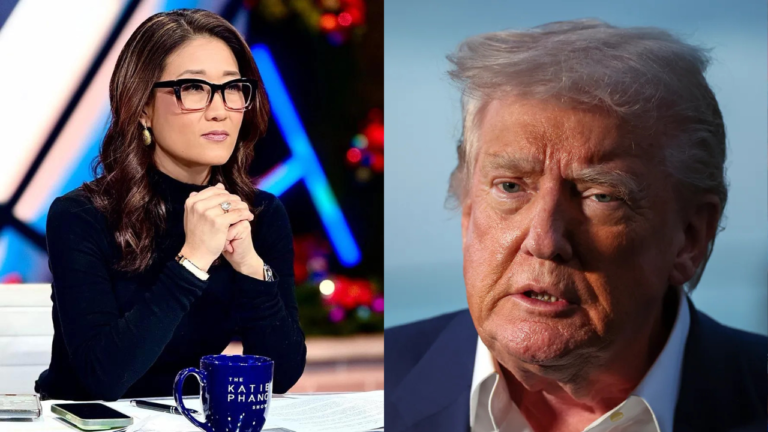
But Phang — an attorney, journalist and former MSNBC host — interpreted those comments very differently.
Writing Sunday, she highlighted Trump’s acknowledgment that the policy might not survive judicial review.
“The President of the United States just confessed, in advance, that this is a stunt he expects to lose,” Phang wrote.
That is Phang’s characterization of Trump’s remarks, rather than something Trump himself explicitly said.
Her argument is that Trump’s “whether it survives or doesn’t” comment suggests that winning an eventual legal battle may not be necessary for the president to see value in imposing the restriction now.
Trump, meanwhile, has defended the decision on different grounds.
He argues that the three organizations repeatedly publish dishonest or deliberately negative coverage and that he should not be required to give them access to the White House.
“If they want to write them, that’s fine,” Trump said of stories he objects to. “But I don’t have to let them into my — into the people’s house.”
The controversy moved beyond rhetoric Saturday.
Journalists from the affected organizations were denied access to the White House after previously issued credentials were disabled or confiscated.
The White House Correspondents’ Association responded by calling for their access to be restored.
Its president, Fox News senior White House correspondent Jacqui Heinrich, said the action “violates the First Amendment” and warned that allowing the government to exclude outlets because officials dislike their coverage could have implications far beyond the three organizations currently targeted.
The dispute also arrives with substantial legal history.
In 2018, the Trump administration revoked Acosta’s credential following a contentious White House news conference.
CNN sued Trump and several administration officials.
A federal judge ordered the White House to temporarily restore Acosta’s credential, after finding that CNN and Acosta were likely to succeed on their due-process claim. The White House subsequently restored his pass.
More recently, the Trump administration became embroiled in another press-access court battle involving the Associated Press.
That history was precisely why Friday’s question to Trump mattered.
The reporter was not merely asking whether Trump supported his own decision. She was asking why he believed this attempt would fare differently from a previous confrontation that ended with CNN’s reporter regaining access.
Trump’s answer left the ultimate outcome open.
Whether a court will eventually rule against the administration in this latest dispute remains unknown.
But Phang believes the president’s own words reveal something important about the strategy behind the move.
Trump said it was worth “pointing it out” whether the restriction survives or not.
Phang heard that — and immediately called attention to what she believes it means.
About the Author