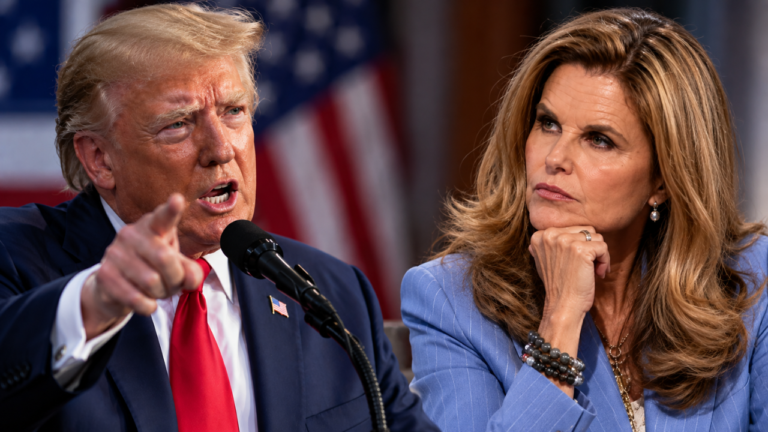
Maria Shriver issued a blistering warning Tuesday after Donald Trump stunned critics with remarks about Iran being able to “take out” Los Angeles and San Diego — comments that prompted an immediate backlash from leaders across California.
“This should outrage every American,” Shriver wrote on X.
“This is the president of the United States telling Iran to bomb American cities,” she continued. “I live in Los Angeles, but that’s beside the point. Tomorrow it could be your city.”
Shriver then made her broader warning clear.
“My fellow Americans, this is not normal. This is not funny. This behavior should ring alarm bells for us all!”
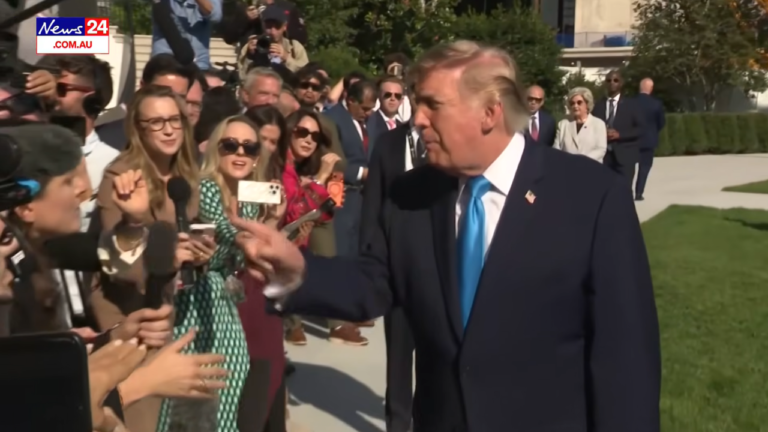
The controversy began Monday night during Trump’s campaign rally in Grand Island, Nebraska.
Trump was defending the economic costs Americans have experienced during the ongoing war with Iran, arguing that higher prices were a “small price to pay” for keeping the United States and the world safe.
Then came the remarks that set off the firestorm.
“They can take out a city,” Trump said.
“Let ’em take out Los Angeles. Let ’em take out San Diego.”
Some members of the crowd could be heard cheering.
“This is a very small price to pay,” Trump continued, before predicting that the conflict would soon be over.
The White House insists Trump’s words have been misinterpreted.
White House Communications Director Steven Cheung argued that Trump was describing what could happen if Iran were allowed to develop nuclear weapons — not encouraging Tehran to attack American cities.
According to that interpretation, Trump was arguing that the economic costs of the current war are justified because the conflict is preventing Iran from eventually gaining the ability to strike American cities.
But Trump’s choice of words nevertheless triggered condemnation from California officials.
Gov. Gavin Newsom called the remarks “deranged and dangerous.”
San Diego Mayor Todd Gloria responded that his city is “not collateral damage” and “not expendable.”
Los Angeles Mayor Karen Bass said the role of an American president is to protect the country, “not to actively threaten it and encourage attacks on American lives.”
And Shriver’s intervention carried an unusual historical resonance.
Shriver is the niece of President John F. Kennedy, whose presidency was defined in part by the Cuban Missile Crisis — thirteen days in October 1962 when the United States and Soviet Union came terrifyingly close to nuclear confrontation.
Kennedy’s administration ultimately reached an agreement with Soviet leader Nikita Khrushchev that led to the removal of Soviet nuclear missiles from Cuba without triggering a nuclear war.
More than six decades later, his niece was publicly condemning another American president over rhetoric involving the potential destruction of American cities.
Shriver was hardly alone.
Trump’s comments even drew criticism from within his own party.
Jim Desmond, the Republican congressional candidate and former San Diego County supervisor, rejected Trump’s remarks Tuesday.
“I served to protect Americans, not write off American cities,” Desmond said, according to The Guardian.
That Republican criticism underscores why Trump’s remarks have developed into something larger than another partisan fight between the White House and California Democrats.
The debate now isn’t simply over what Trump intended.
It is also over what Americans should expect to hear from their president when discussing nuclear threats against American cities.
The White House says Trump was warning Americans about the danger posed by a nuclear-armed Iran.
Shriver heard something very different.
And her message to Americans was simple:
Don’t treat rhetoric like this as normal.
About the Author