
Donald Trump escalated his public feud with Fox News during election-night coverage on November 3, attacking the network for giving airtime to Democrats and claiming its ratings were falling because of its treatment of him.
The lengthy Truth Social post came after Trump had already criticized Fox News commentator Jessica Tarlov, whom he insulted in a separate message while watching the network’s election coverage.
This time, however, the president expanded his criticism to the entire network, its political coverage, its corporate parent and its audience.
Trump opened his post by accusing Fox News of spending too much time covering Democrats.
“Fox News Ratings are way down (27%!) because they’re spending too much time covering the Trump Deranged Dumocrats! All of those people who used to watch Fox, and no longer do, get it,” he wrote.
The president presented the alleged ratings decline as evidence that viewers were rejecting the network’s coverage.
But the claim raises an important distinction: Even if a particular ratings comparison shows a decline, that does not establish why viewers stopped watching.
Television audiences can change for many reasons, including differences in programming, competing news events, audience habits and the periods being compared.
Trump nevertheless insisted that his own popularity was not responsible.
“It’s them, not me — My numbers are better than they have ever been.”
He then cited a CNN poll in an attempt to demonstrate his standing among Republican voters and his place in the party’s history.
“The new CNN Poll stated that ‘TRUMP’ is at 99% among Republicans and, among Republican Presidents, ‘TRUMP’ is at 53%, compared to Ronald Reagan at 18%, and Abraham Lincoln at 8%! Fox knows this, and so does everyone else!”
Those figures require context.
A survey comparing Republican voters’ preferences among historical presidents is not the same measurement as Trump’s current national job approval rating. The two measures answer different questions and cannot be used interchangeably.
Trump’s post also shifted from television ratings to political contributions associated with Fox Corporation.
He questioned why the company’s political spending included Democratic politicians and organizations, naming several prominent members of Congress and party committees.
“Also, why is Fox Corp. spending so much money donating to the ‘Worst of the Worst,’” Trump wrote, before identifying Hakeem Jeffries, Jamie Raskin, Ted Lieu, Pete Aguilar and several Democratic organizations.
His list also included the California Democratic Party, the Democratic Congressional Campaign Committee, the Democratic Senatorial Campaign Committee, the Congressional Black Caucus PAC, CHC Bold PAC and the New Democrat Coalition Action Fund.
The criticism suggested that Trump expected the network’s corporate parent to demonstrate political loyalty to him.
However, political contributions by a corporation’s associated political action committees or employees do not, by themselves, establish how a newsroom makes editorial decisions. The specific donations and their sources would need to be examined separately.
Trump closed his message by predicting further trouble for Fox News.
“No wonder Fox News Ratings are collapsing, and they’re going to go down a lot further,” he wrote.
He again insisted that his personal standing was not the reason for the network’s problems.
“They’re way down, not because of me, but because they are AGAINST me! This happened once before, and Fox almost collapsed. It’s happening again!”
The attack marked another episode in Trump’s complicated relationship with Fox News.
Although the network has long featured prominent conservative commentators and frequently covers Republican politics, Trump has repeatedly criticized it when he disagrees with its reporting, interviews or on-air personalities.
His earlier election-night criticism of Jessica Tarlov demonstrated that tension.
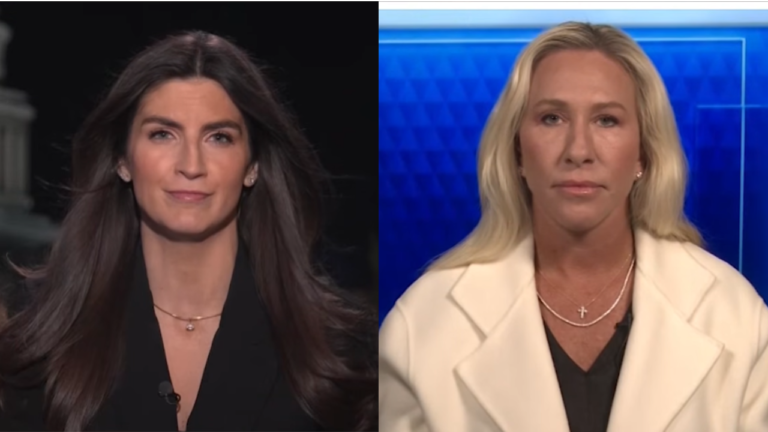
Tarlov, a Democratic strategist and commentator on The Five, has frequently challenged conservative arguments on the network. Trump complained about her voice and attacked her personally in a separate Truth Social post.
The subsequent message broadened his complaint from an individual commentator to Fox News as an institution.
The timing was politically significant.
Trump’s remarks appeared during the November 3 midterm elections, when voters were determining the composition of Congress and the future balance of legislative power.
But his complaints about Fox News should not be treated as evidence that any particular Republican candidate lost because of the network’s coverage.
Nor does the Truth Social post establish that Fox News was deliberately working against the president.
What it does establish is that Trump publicly criticized the network for covering Democrats, disputed suggestions that his popularity had declined and questioned the political contributions associated with its corporate parent.
The episode also illustrates how disagreements between the president and a television network can extend beyond news coverage into disputes over audience loyalty and political influence.
Whether Fox News responds directly to Trump’s accusations remains a separate question.
For now, the president’s own words provide a revealing account of what frustrated him about the network’s election-night coverage.
About the Author

Donald J. Trump has no friends unless you win or do as Trump tells you. Trump demands loyalty, but he will never be loyal to anyone.