
Donald Trump has turned his latest Nobel Peace Prize disappointment into an extraordinary public confrontation, insisting that he should have received not one, but eight of the world’s most prestigious peace awards — while attacking the internationally respected human rights lawyer who actually won.
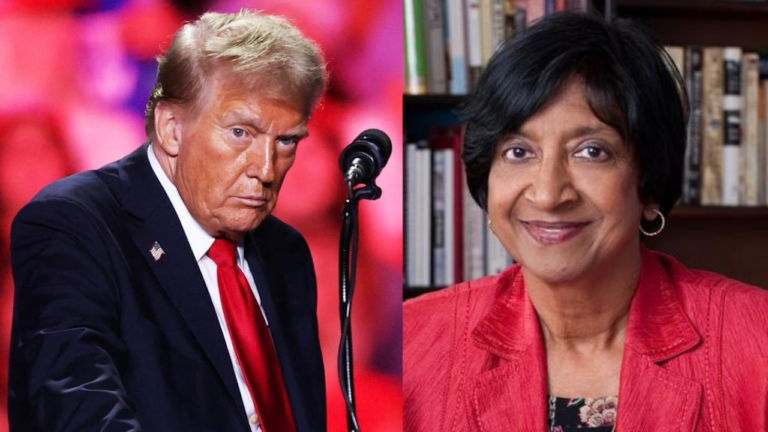
The president’s lengthy Truth Social statement followed Friday’s announcement that South African jurist Navi Pillay had been awarded the 2026 Nobel Peace Prize for her decades of work defending human rights, strengthening international law, and advancing accountability for atrocities.
Rather than simply congratulating the winner, Trump devoted much of his response to arguing that the Nobel Committee had failed to recognize his own accomplishments.
And the number he settled on was remarkable.
“In actuality, I should have won 8 Nobel Peace Prizes, not just 1,” Trump declared.
The president based that assertion on his repeated claim that he had settled eight international conflicts, including disputes involving India and Pakistan, Armenia and Azerbaijan, Israel and Hamas, and several others.
But his accounting has faced substantial scrutiny. Some of the conflicts he claims to have resolved have continued, while the extent of his personal contribution to other diplomatic breakthroughs remains disputed.
That distinction did not appear to temper his reaction.
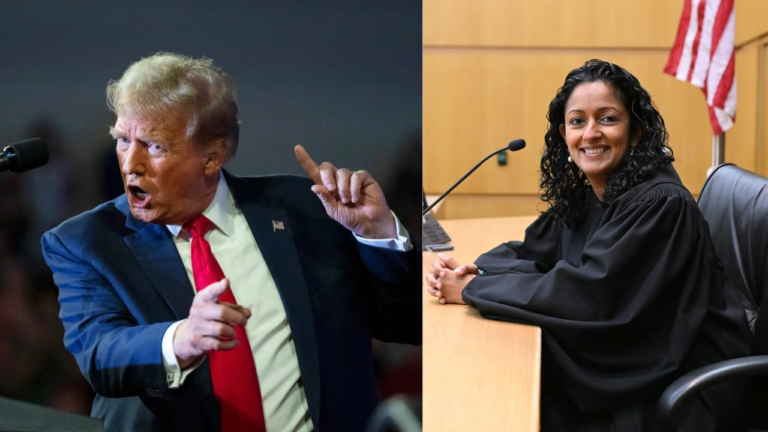
Trump also directed his criticism at Pillay herself, claiming that she was virtually unknown and suggesting that opposition to Israel explained her recognition.
“I don’t know what the woman has done,” he wrote.
It was a striking dismissal of a woman whose career in international justice spans decades.
Pillay grew up under South Africa’s apartheid system and became a pioneering lawyer challenging racial discrimination. She later served as a judge at the International Criminal Tribunal for Rwanda, where she contributed to landmark developments in the prosecution of genocide and sexual violence.
She also served on the International Criminal Court and was the United Nations High Commissioner for Human Rights from 2008 to 2014.
More recently, Pillay chaired a United Nations commission investigating human rights violations in Israel and the occupied Palestinian territories.
Her work has drawn political criticism, particularly from Israeli officials and supporters of Israel who dispute findings of the commission. But her professional record extends far beyond that controversy.
The Norwegian Nobel Committee recognized Pillay for her contribution to peace and international law, emphasizing the importance of accountability, legal institutions, and protection of human dignity.
Trump’s response presented a sharply different understanding of what the award should recognize.
In his statement, he credited himself with preventing additional wars, strengthening NATO, securing hostage releases, confronting Iran, and transforming Venezuela’s political future.
He claimed that his actions had saved more lives than those of anyone else in history.
These sweeping assertions were presented without the supporting evidence needed to establish such comparisons.
Trump also invoked María Corina Machado, the Venezuelan opposition leader who received the 2025 Nobel Peace Prize and later presented him with her Nobel medal.
The gesture did not make Trump a Nobel laureate. The Nobel Committee has explained that a Peace Prize cannot be transferred or shared after it is awarded.
Nevertheless, Trump treated the gesture as further recognition of his own diplomatic record.
The controversy comes at a particularly complicated moment for his administration.
The United States remains involved in a war with Iran, while the conflict between Russia and Ukraine continues despite Trump’s repeated promises and diplomatic efforts to bring it to an end.
Those circumstances have prompted questions about how the president’s claims of having established an unprecedented record of peace should be assessed.
Trump has pointed to ceasefires, negotiations, diplomatic interventions, and military operations as evidence of his effectiveness.
Critics argue that temporarily reducing hostilities, participating in negotiations, and permanently resolving wars are not interchangeable accomplishments.
The distinction matters when the president is using those claims to argue that he deserved eight separate Nobel Peace Prizes.
His anger was not limited to the committee’s choice.
Trump described the decision as an “indelible stain on Norway” and accused the Nobel institution of being controlled by ideological opponents.
But the Norwegian Nobel Committee operates independently of Norway’s government, a distinction that became especially relevant as Trump directed his complaints toward the country itself.
Committee chairman Jørgen Watne Frydnes reiterated that the organization’s mandate is to apply the criteria established in Alfred Nobel’s will.
Those criteria are not based on how frequently a political leader claims credit for diplomatic achievements.
The award is intended to recognize contributions to peace, international cooperation, and the principles underlying Nobel’s original vision.
This year’s committee placed particular emphasis on the rule of law and the importance of holding perpetrators of grave international crimes accountable.
That focus helps explain why Pillay’s career attracted recognition.
Her work has centered on strengthening institutions capable of investigating abuses and establishing legal responsibility, including in situations where governments and powerful political figures resist outside scrutiny.
Trump, meanwhile, has repeatedly challenged international institutions and emphasized national sovereignty, military strength, and direct negotiations between leaders.
The competing approaches provide important context for the disagreement, even though they do not establish what motivated individual Nobel Committee members.
Friday’s announcement also exposed a familiar feature of Trump’s public rhetoric: his tendency to frame international recognition in terms of whether his own achievements have received sufficient credit.
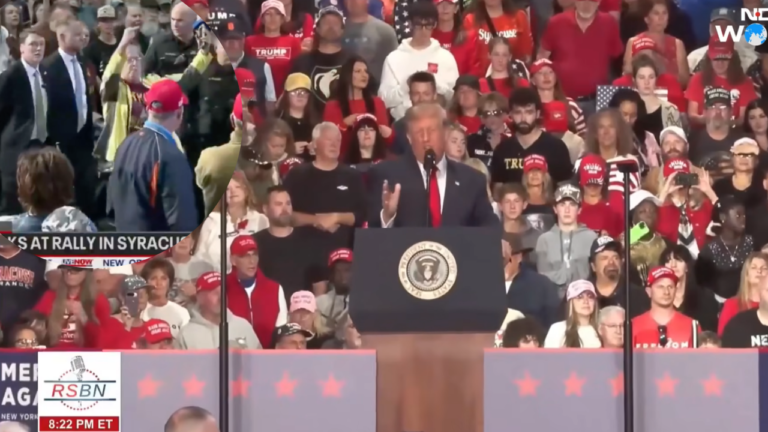
At a campaign rally in Syracuse, New York, he returned to the subject, criticizing the committee and expressing frustration that Pillay had received the award.
His subsequent Truth Social statement escalated the dispute by explicitly claiming entitlement to eight separate prizes.
That claim transformed an already contentious reaction into an unusually sweeping declaration about his place in diplomatic history.
There is no established method for assigning a separate Nobel Peace Prize to each conflict a leader claims to have resolved. Nor does participation in negotiations automatically establish that a particular individual ended a war.
The Nobel Committee’s decision is also not a formal judgment that Trump’s diplomatic actions had no value.
It is a decision to recognize Pillay’s particular contribution to peace and international law.
Yet Trump’s response repeatedly portrayed that decision as a failure to acknowledge both himself and the United States.
For Pillay, the award represents international recognition of a career spent confronting discrimination, documenting abuses, and advancing legal accountability.
For Trump, it has become another public dispute over recognition, diplomatic credit, and the legitimacy of institutions that decline to honor him.
And perhaps the most revealing feature of the controversy is the extraordinary scale of the president’s own claim.
He did not merely argue that he should have won this year’s prize.
He argued that he should have won eight.
As the world recognizes Navi Pillay’s contributions to international justice, the American president has ensured that his dissatisfaction with the decision has become a major political story of its own.
About the Author

Donald J. Trump has to be the center of Attention in his mind; Donald J. Trump is a real SON-of _Bit h for read. America can’t wait till Trump dies. and please take Trump rotten Body to Russia to be buried.