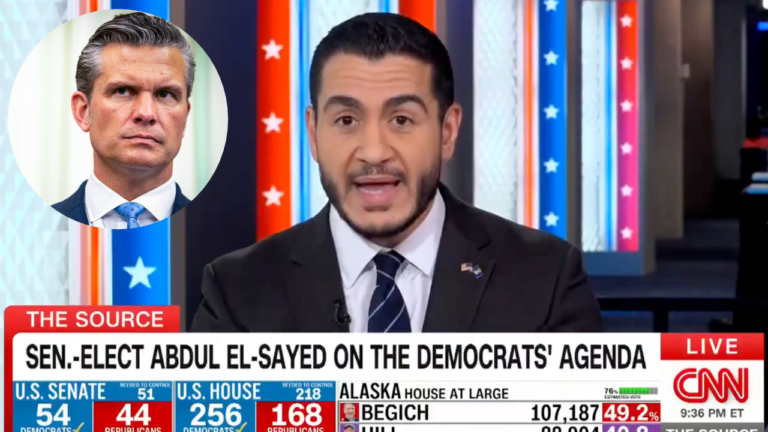
Michigan Senator-elect Abdul El-Sayed has made Donald Trump an extraordinary offer: Help pass Medicare for All, and Democrats can put the president’s name on the legislation.
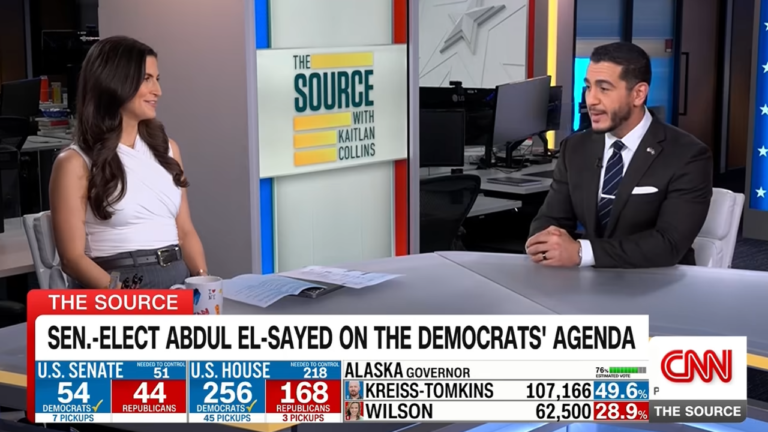
The proposal came during an interview with CNN’s Kaitlan Collins, who questioned El-Sayed about his willingness to call universal healthcare “Trump Care for All” if that would help secure the president’s support.
“Medicare For All has been a big platform of yours that you have pushed and you’ve said that you want to get it passed,” Collins said. “You’ve said that you would even call it Trump Care for All, if that’s what it took?”
El-Sayed smiled before looking directly into the camera and addressing Trump himself.
“Donald, if you’re watching, we can put your name on it. I know you like to put your name on stuff. You can finally meet the unmet promise in America to guarantee everybody health care. So it’s on the table if you want to do it.”
When Collins pressed him on whether he was serious, El-Sayed insisted that the name of the legislation mattered far less than its impact on Americans struggling with medical expenses.
“I don’t care what it’s called. I want people to have health care in this country. Really. Like, really. What you call it is a secondary issue.”
He explained that his goal was to guarantee comprehensive coverage without premiums, copays or deductibles.
“If we’re able to guarantee everybody cradle-to-grave coverage without a copay, a premium, or a deductible, the security of knowing that whatever happens in your life, you’re going to be able to see a doctor without getting hit by a bill that is going to put you into arrears, where you’re going to have to worry about medical debt, $225 billion in this country already. I think that would be a win.”
Then he repeated his offer.
“So, if he wants to call it Trump Care for All, like, I’m game.”
Collins also questioned whether such an ambitious healthcare overhaul could pass Congress, even after Democrats won control of both the House and Senate in the midterm elections.
El-Sayed acknowledged that he had not spoken directly with Trump about the proposal.
“I haven’t talked to the president, but I’m really interested in understanding. He said that he has made peace with the outcomes of the election. He understands that they lost. Now the question is, do you want to actually try to get some things done over the next two years?”
He expressed skepticism about some of Trump’s recent political decisions, including the appointment of Stephen Miller as White House chief of staff and Jim Jordan’s selection as the next House Republican leader.
But El-Sayed said he remained willing to work with the administration on policies that could help Americans.
“Right now, Americans are struggling under the weight of very basic things that they cannot afford. Health care is one of those things.”
He pointed to rising insurance premiums, saying many families were facing another year of double-digit increases.
For El-Sayed, Medicare for All remains a central answer to those affordability concerns.
“One of the most important things we can do to both address affordability and then the ability to see a doctor is to guarantee every single person public health insurance in this country,” he said.
“That’s what Medicare for All is. So again, what you call it is secondary. What it does in your life, that’s the whole point.”
He ended with a pointed remark about Trump’s fondness for putting his name on prominent projects.
“None of us ran to name things, except for Donald Trump. Most of us ran to actually solve problems in people’s lives.”
Whether Trump would entertain such a proposal remains unknown. No agreement has been announced, and passing Medicare for All would require substantial congressional support.
But El-Sayed made his position clear: If naming the program after Trump could help guarantee healthcare for every American, he would be willing to make that trade.
SOURCES:
About the Author