
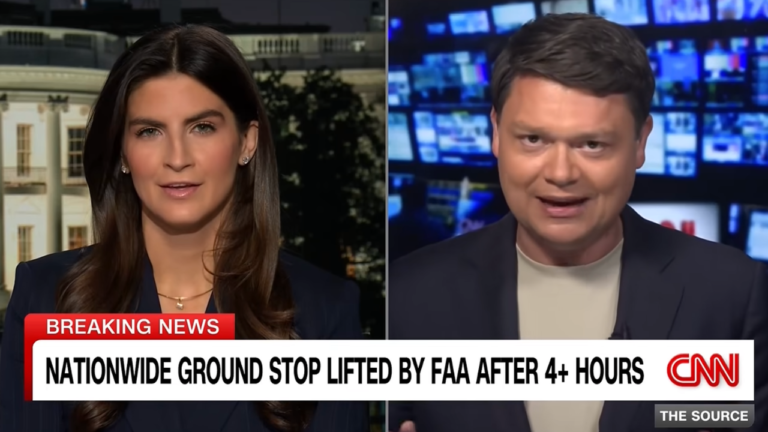
CNN anchor Kaitlan Collins delivered a blunt assessment of the nationwide aviation disruption that brought American air travel to a standstill on Friday, November 13, as new details emerged about the aging technology behind the unprecedented shutdown.
During The Source with Kaitlan Collins, the CNN host discussed the emergency with aviation analyst Pete Muntean following a White House briefing by Transportation Secretary Sean Duffy and Homeland Security Secretary Markwayne Mullin.
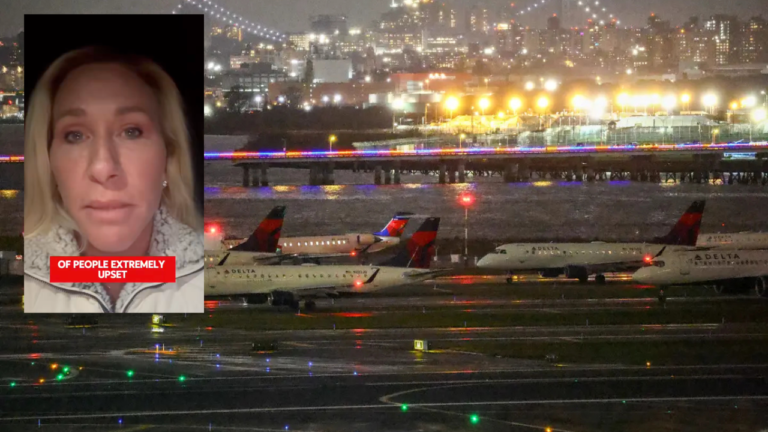
The Federal Aviation Administration had ordered a nationwide ground stop at 3:54 p.m. Eastern Time, temporarily halting departures across the country.
The restriction remained in place for more than four hours before being lifted at 8:15 p.m., leaving thousands of travelers stranded and airlines facing extensive delays and cancellations.
But the explanation for the disruption raised an even larger question about the reliability of America’s aviation infrastructure.
Muntean told Collins that approximately 11,000 flights were still awaiting operation when the emergency restrictions began, affecting an estimated 1.5 million passengers.
According to the aviation analyst, the problem involved time delay multiplexing, or TDM, a telecommunications technology used to transmit multiple signals through shared communications infrastructure.
The system relies on older copper-wire technology and plays an important role in the communications network supporting American air traffic operations.
Muntean explained that the failure had severely affected the ability of air traffic controllers to communicate and receive critical information.
Without those systems functioning properly, he said, aviation authorities faced an extremely difficult operational situation.
The discussion also turned to the FAA’s efforts to modernize air traffic management, including a newly introduced artificial intelligence system designed to improve flight routing.
Muntean cautioned that introducing new technology into an aging network could create additional vulnerabilities if the underlying infrastructure remained unreliable.
He emphasized that the new AI system did not appear responsible for the shutdown, but argued that investigators needed to examine how modern technology interacted with older aviation systems.
Collins responded with a particularly direct description of the situation.
“Yeah. I mean, and it’s led to this total dumpster fire that is now playing out across the nation’s airports.”
Muntean agreed, summing up the situation with a single word: “Meltdown.”
Their exchange reflected the scale of the disruption as travelers across the country struggled with canceled departures, missed connections and uncertainty about when normal operations would resume.
The incident also raised broader concerns about the condition of America’s air traffic control infrastructure and the challenges involved in upgrading systems that remain essential to national transportation.
Although the nationwide ground stop was eventually lifted, the consequences continued into the weekend as airlines worked to restore their schedules.
For federal transportation officials, the immediate priority was returning the aviation network to normal operations while determining how the telecommunications failure had developed.
For Collins and Muntean, the incident demonstrated how a technical problem involving aging infrastructure could rapidly become a nationwide transportation emergency.
And as the country recovered from the disruption, questions remained about what changes would be necessary to prevent a similar failure.
About the Author


Trump is going to stretch this out as far as possible until Congress gives him the funds to get a new system, etc. He’s still trying to steal $50b. Trump wants that ballroom completed so he can hijack our country even more than he has already.