A federal judge has ordered the Trump administration to immediately remove three taxpayer-funded advertisements that appeared to cross the line between promoting government policy and campaigning for Republicans ahead of the November 3 midterm elections.
U.S. District Judge Jennifer Rochon issued the order Friday, October 30, directing the administration to take the advertisements off official government websites and social media accounts and cancel planned distribution through authorized third parties.
One of the ads, titled “$5,000 to Americans,” promotes President Donald Trump’s claim that Americans would receive $5,000 each if Republicans retain control of Congress.
The advertisement features an unusually direct election-related promise from the president.
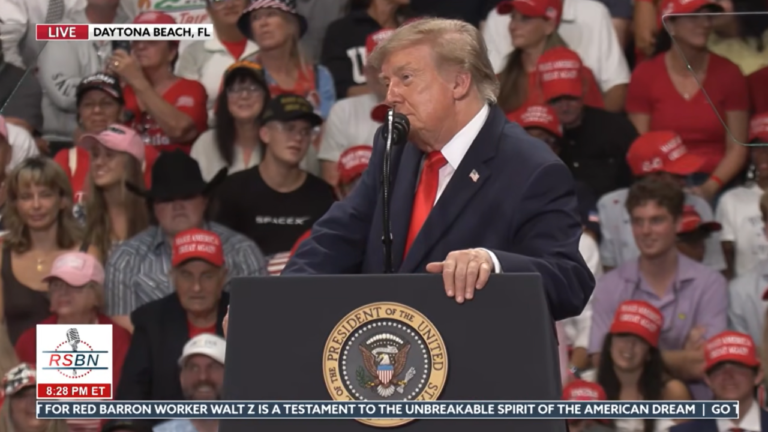
“If the Democrats win, you will have an economic depression. If the Republicans win, you will each have $5,000 in your pocket,” Trump says in the ad.
The other two advertisements targeted by the order are titled “Every Democrat Voted Against No Tax on Tips” and “Cost of Socialism.”
All three were produced using government resources, raising questions about whether taxpayer money was being spent on partisan political messaging.
The ruling came in a lawsuit brought by a coalition that includes Common Cause, a nonpartisan government watchdog organization. The plaintiffs argued that Congress had not authorized public funds to be used for advertisements intended to influence an election.
Rochon found that the challengers were likely to succeed on their claims concerning the three advertisements and could suffer irreparable harm if they remained in circulation while the case proceeded.
But the judge did not grant everything the plaintiffs requested.
The coalition had sought the removal of at least 13 advertisements. Rochon declined to block the others, recognizing that presidential administrations are permitted to explain their policies, defend their decisions and respond to criticism.
The distinction, according to the court’s preliminary findings, was whether particular government-funded messages had crossed into partisan electioneering.
Friday’s hearing also produced a pointed exchange over how quickly the administration would comply.
Rochon had previously issued an order concerning other advertisements, but government lawyers had offered explanations for why some of the responsible officials could not immediately be reached.
This time, the judge made clear that she expected prompt compliance.
“Everyone is here. Everyone can hear my order. No one is at the theater,” Rochon said.
She also emphasized that the approaching election created an urgency the court could not ignore.
“This court can neither postpone an election nor turn back the clock,” she said.
The order extended beyond the administration’s own online accounts.
Rochon directed officials to cancel planned placements and distribution arrangements through authorized third parties, including Trump’s allied super PAC, MAGA Inc.
Government lawyers challenged that portion of the order, arguing that the administration does not control the super PAC and that the organization was not itself named as a defendant.
The White House responded sharply to the ruling.
Spokesperson Lauren Bis called Rochon a “Biden-appointed activist judge” and described the order as “lawless,” arguing that the administration was being prevented from distributing patriotic messages.
Administration lawyers have maintained that the advertisements are lawful government communications intended to inform Americans about the president’s policies and respond to political criticism.
The plaintiffs see the matter differently.
Bradley Girard, an attorney with Democracy Forward, said the temporary order would prevent the administration from continuing what his organization views as an improper use of taxpayer resources while the litigation proceeds.
The legal dispute arrives at a particularly sensitive moment.
With Election Day approaching, the challenged advertisements were reaching voters during the final stretch of a closely watched contest for control of Congress.
The ruling does not prevent Trump from advocating for Republican candidates or defending his administration’s record. It addresses whether public money and official government communications may be used for particular election-related messages.
Nor is it a final judgment that all the challenged advertisements were unlawful. The order is temporary, and the court could revise it after considering additional evidence.
For now, however, the administration has been instructed to remove the three advertisements immediately.
The larger question — where legitimate government communication ends and taxpayer-funded partisan campaigning begins — remains before the court.
About the Author