Donald Trump’s extraordinary new fight with the American press just spilled directly into the Oval Office.
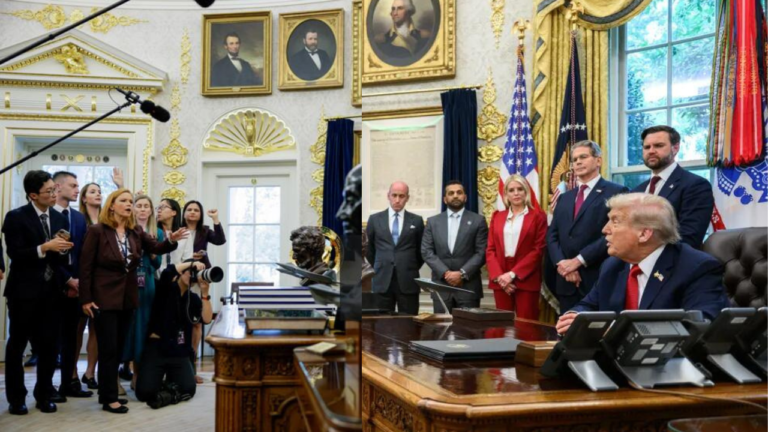
Hours after announcing that CNN, MS NOW and Politico would be banned from the White House, Trump was confronted face-to-face by a reporter over the First Amendment implications of his decision.
And the exchange quickly got personal.
Bloomberg White House correspondent Catherine Lucey raised the issue as Trump took questions from reporters Friday.
“So the freedom of the press is enshrined in the First Amendment,” Lucey began.
Trump immediately cut in.
“Oh, thank you for telling me,” he said.
But Lucey kept going.
“Are you trying to intimidate the press from doing their job?” she asked.
Trump denied it — then turned his attack directly on the reporter standing in front of him.
“No, no, no. I dislike dishonest press like you,” Trump responded. “I think you’re terrible.”
He then said that while he dislikes what he considers dishonest media, he likes “honest press.”
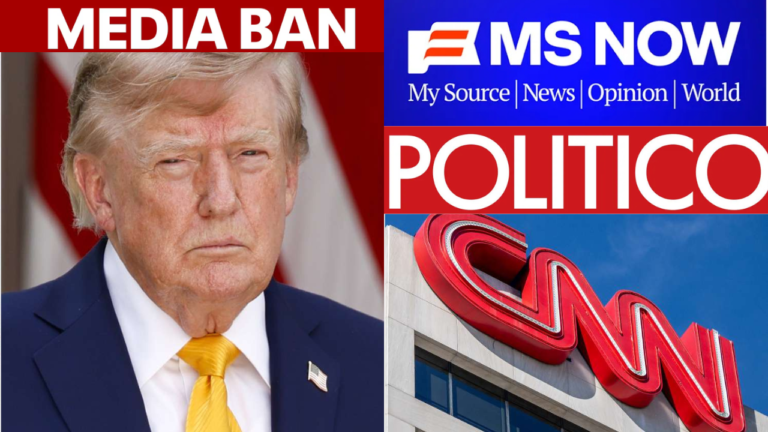
The remarkable confrontation came just hours after Trump announced that three major American news organizations — CNN, MS NOW and Politico — would be banned from the White House.
Trump accused all three organizations of spreading what he called “FAKE NEWS” and reporting “FICTION and LIES” about his administration.
But he didn’t stop there.
Trump also warned that other news organizations could follow.
Speaking to reporters later Friday, the president doubled down on the scope of what he wants to do.
“I don’t want them in my office,” Trump said of the targeted outlets. “I don’t want them here.”
Asked how far the ban could extend, Trump responded that it would go “as far as you can.”
The announcement immediately raised questions about how the White House intends to enforce the president’s directive.
CNN personnel were reportedly still working from the White House after Trump made his initial announcement, suggesting that at least initially the declaration had not translated into a complete physical removal of the network’s journalists.
But the constitutional stakes are potentially much larger than the immediate logistics.
The First Amendment explicitly protects freedom of the press, and previous attempts by presidential administrations to restrict individual journalists’ White House access have ended up in federal court.
Trump’s own administration has already been involved in one major fight over press access during his second term.
The White House previously restricted the Associated Press from certain presidential events after the news organization refused to adopt Trump’s preferred name, “Gulf of America,” for the Gulf of Mexico.
The AP sued the administration.
There is also precedent involving individual White House reporters. During Trump’s first term, a federal judge ordered the White House to restore journalist Brian Karem’s press credential after it had been suspended.
Now Trump’s confrontation with Lucey puts a human face on a much broader fight.
She wasn’t asking him about whether he liked CNN’s coverage.
She asked whether banning news organizations from the White House was intended to intimidate journalists from doing their jobs.
Trump said no.
But rather than leaving it there, he attacked the reporter asking the question.
“I dislike dishonest press like you. I think you’re terrible.”
The clash is particularly notable because this isn’t the first time Trump and Lucey have had a hostile encounter.
When Lucey questioned Trump aboard Air Force One last year about Jeffrey Epstein, Trump responded by telling her, “Quiet, piggy,” an insult that generated widespread criticism at the time.
Now the same reporter has confronted him again — this time over one of the most consequential press-freedom disputes of his second administration.
CNN has said it stands behind its White House journalists and their reporting. Press-freedom organizations have also condemned Trump’s announcement.
The Committee to Protect Journalists called the decision an attack on First Amendment rights and argued that journalists must be able to do their jobs without government retaliation.
Exactly what happens next remains uncertain.
Trump has announced the ban, but questions remain about how completely it will be enforced, whether White House credentials will be revoked, how the presidential press pool will be affected and whether the targeted organizations will challenge the administration in court.
Trump, meanwhile, is showing no indication that he intends to back down.
Instead, he is openly suggesting that additional news organizations could find themselves targeted next.
And when a reporter confronted him directly about whether that was designed to intimidate the press, his answer quickly became personal:
“I think you’re terrible.”
About the Author