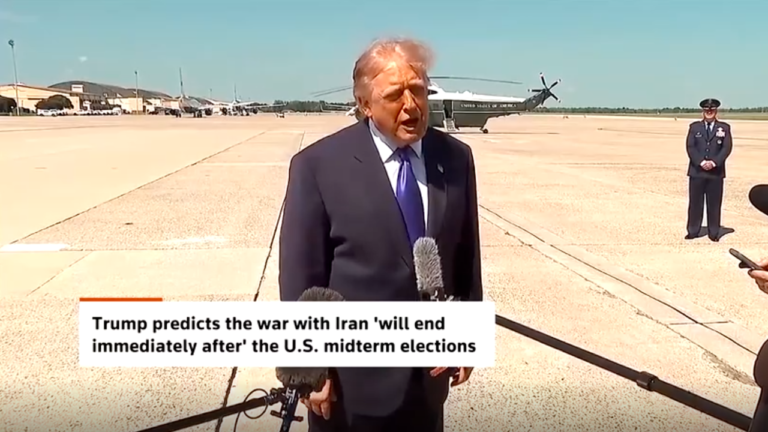
After repeatedly failing to gain traction, the Senate war powers resolution aimed at limiting Donald Trump’s ability to continue military action against Iran suddenly broke through in dramatic fashion after Senator Bill Cassidy switched sides and voted to advance it.
Cassidy joined nearly every Democrat in supporting the measure, along with Republican Senators Rand Paul, Susan Collins, and Lisa Murkowski. The only Democrat to vote against moving it forward was Pennsylvania Senator John Fetterman, one of the Senate’s most aggressively pro-Israel voices.
The procedural vote passed 50-47 after seven previous attempts had failed.
Cassidy’s reversal proved decisive. He had previously voted against the effort, but this time sided with lawmakers arguing Congress must reassert its constitutional authority over war powers before the conflict with Iran escalates further.
Several Republican absences also changed the outcome.
Senators John Cornyn, Tommy Tuberville, and Thom Tillis did not vote, creating just enough room for Democrats and a handful of Republican defectors to push the resolution through.
Cornyn’s absence came just hours after Trump publicly undercut him by endorsing Texas Attorney General Ken Paxton, Cornyn’s scandal-plagued primary challenger. Tillis, meanwhile, is not running for reelection.
The resolution itself would require Trump to “remove the United States Armed Forces from hostilities within or against Iran, unless explicitly authorized by a declaration of war or a specific authorization for use of military force.”
In other words, Congress is attempting to force the administration to either seek formal approval for continued military involvement or end it.
The measure still faces major hurdles. It now requires final passage in both the Senate and the House, and even if it succeeds, Trump could still veto it.
But politically, a veto could prove risky.
Overriding Congress in order to continue an increasingly unpopular conflict would put Trump directly at odds with growing public frustration over rising gas prices, economic instability, and fears of another prolonged Middle East war heading into the midterm elections.
That political pressure is exactly why this vote matters.
Supporters of the resolution argue Trump entered the conflict largely to support Israeli Prime Minister Benjamin Netanyahu’s regional objectives while offering little explanation for how deeper U.S. involvement directly benefits ordinary Americans.
Meanwhile, American families are already feeling the economic consequences through higher fuel costs and broader inflation concerns.
For many lawmakers backing the resolution, the message is becoming increasingly simple: Congress never authorized another open-ended war, and the public is losing patience with endless escalation abroad while costs rise at home.
After months of failed attempts, the Senate finally sent a signal that resistance to Trump’s Iran policy is no longer isolated to Democrats alone.
About the Author