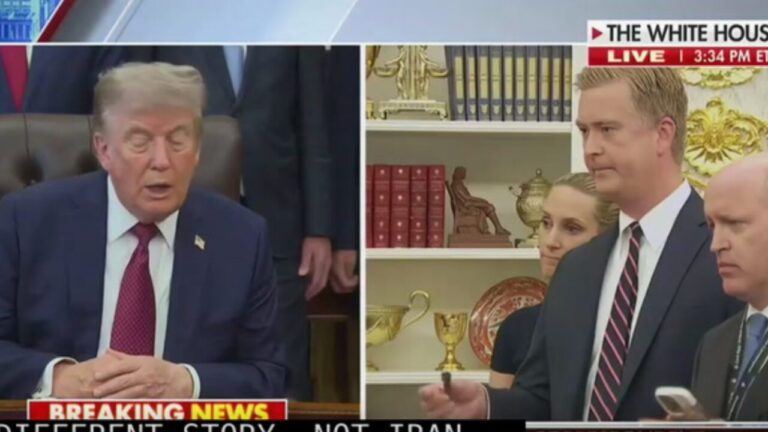
The United States is getting ready for a possible conflict with Iran again as the current pause in fighting is set to end in just three days. On Saturday, President Donald Trump called an emergency meeting in the White House Situation Room to deal with the growing tension around the Strait of Hormuz and ongoing talks with Iran.
Iran’s top security group said it is looking at new offers the U.S. made during talks led by Pakistan’s army chief, Asim Munir.
However, no new date has been set for the talks between the U.S. and Iran, which means the chance of the talks failing and fighting starting again is very real.
Iran recently said it would close the Strait of Hormuz again, and there have been several attacks on ships in the area.
This happened less than 24 hours after Trump said a deal could be reached “within a day or two.” A top U.S. official warned that if there is no progress soon, the war could start within days.
The U.S. naval blockage and Iran’s closure of the waterway are bringing the two countries closer to conflict.
The Situation Room meeting included Vice President Mike Pence, Secretary of State Marco Rubio, Defense Secretary Pete Hegseth, and Treasury Secretary Scott Bessent. Others present included White House Chief of Staff Susie Wiles, White House envoy Steve Witkoff, CIA Director John Ratcliffe, and Joint Chiefs Chairman Gen. Daniel Caine.
⭕️ President Donald Trump convened a White House Situation Room meeting Saturday to address the escalating Strait of Hormuz crisis and stalled Iran talks, Axios reports.
— Drop Site (@DropSiteNews) April 18, 2026
The ceasefire is set to expire in three days, raising fears of renewed war if no deal is reached.
A source… pic.twitter.com/UKnt76xiFb
This comes as the White House has been in the news for other reasons, including a big event planned for Trump’s 80th birthday.
The renewed tension followed some progress on issues like Iran’s uranium enrichment and its stockpile of enriched uranium.
According to a source close to the talks, Iran closed the Strait in response to what it sees as U.S. dishonesty.
The closure has stopped the flow of oil tankers and commercial ships passing through the waterway, putting more pressure on both sides to reach an agreement quickly.
The U.S. has denied that claim.
Trump said Iran “wanted to close up the strait again” and that “they can’t blackmail us.” He added, “It’s going actually along very well, and we’ll see, but we’ll have some information by the end of the day.” At the same time, the Trump administration has been facing criticism over a new government app that is accused of collecting too much user data.
The U.S. Central Command said that since the naval blockade of Iranian ports started on Monday, 21 ships have been sent back to Iran.
The blockade targets “ships trying to enter or leave Iranian ports.” Iran’s military has promised to keep control of the Strait of Hormuz as long as the U.S. blockade continues, making it unclear how either side can back down without looking like they’re giving in first.
The Strait of Hormuz is one of the most important waterways in the world, linking the Persian Gulf to the Gulf of Oman.
About 20% of the world’s oil passes through it, and a long closure would cause oil prices to rise sharply and impact global energy markets. The UN has called for both sides to be careful, and the European Union has offered to help mediate talks between the U.S. and Iran.
With no clear agreement and the ceasefire window closing fast, the situation is very unstable.
Both governments are sticking to their positions, and unless one side takes a big step in the next few hours, the chance of renewed war is growing.
About the Author