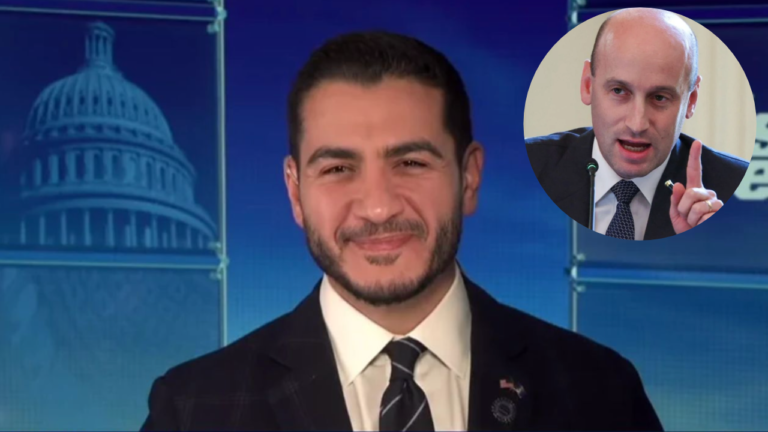
Michigan Senator-elect Abdul El-Sayed sharply criticized President Donald Trump’s decision to appoint Stephen Miller as White House chief of staff, questioning whether the administration genuinely intends to cooperate with Democrats following the 2026 midterm elections.
During an appearance on ABC News’ This Week on November 8, El-Sayed challenged the president’s choice to replace outgoing chief of staff Susie Wiles with Miller, one of Trump’s longest-serving and most influential advisers.
The criticism came just days after Democrats secured majorities in both chambers of Congress, changing the political landscape for the remaining two years of Trump’s presidency.
Trump announced Miller’s appointment on November 6, praising his longtime aide and confirming that he would assume the position on November 9.
Miller, who previously served as deputy chief of staff, has played a central role in shaping the administration’s immigration and domestic policy agenda.
During the ABC interview, host Jonathan Karl asked El-Sayed what Miller’s promotion suggested about the White House’s willingness to work with the incoming Democratic Congress.
El-Sayed argued that Trump’s decision appeared inconsistent with the president’s stated desire for cooperation.
He noted that Trump had expressed interest in working with Democrats on affordability and other issues important to voters, but questioned whether appointing Miller would help accomplish those goals.
El-Sayed then described Miller as the “most broken man” and Trump’s administration as the “most dysfunctional White House” he had seen.
The senator-elect went further, criticizing Miller’s influence over immigration enforcement and accusing him of encouraging fear and hostility.
He questioned what Miller had contributed to American society beyond deepening political divisions and accused him of using Immigration and Customs Enforcement as an instrument of aggressive immigration policy.
Miller has been one of the administration’s leading advocates for expanded deportations and tougher immigration enforcement, making him a frequent target of criticism from Democratic lawmakers and immigration advocates.
El-Sayed’s comments reflected those disagreements, particularly over the treatment of immigrants and the federal government’s use of enforcement powers.
The White House, however, presented a sharply different assessment of Miller’s record.
In announcing his promotion, the administration praised his contributions to border security, crime reduction and its broader policy agenda.
Vice President JD Vance also publicly welcomed the appointment, describing Miller as an “amazing patriot” and expressing confidence in his ability to serve in the new role.
The contrasting reactions highlighted the political tensions surrounding Trump’s decision.
For El-Sayed, the appointment raised questions about whether the president intended to pursue meaningful negotiations with Democrats or continue relying on a confrontational approach.
His criticism also came as Democrats prepared to assume control of Congress in January, giving them greater influence over legislation, oversight and negotiations with the White House.
Despite his objections to Miller, El-Sayed indicated that he remained willing to engage with the president on policies that could benefit his constituents.
He emphasized the importance of addressing affordability and other economic concerns that had featured prominently in the election.
The senator-elect’s broader argument was that cooperation would require more than public statements from Trump. It would also depend on the administration’s personnel decisions and willingness to negotiate.
Miller’s appointment has therefore become an early point of disagreement between the president and members of the incoming Democratic congressional majority.
And El-Sayed’s criticism made clear that the new chief of staff will face close scrutiny from lawmakers who strongly oppose his approach to immigration enforcement and federal policy.
SOURCES
Knewz · ABC News · White House · IBTimes UK
About the Author