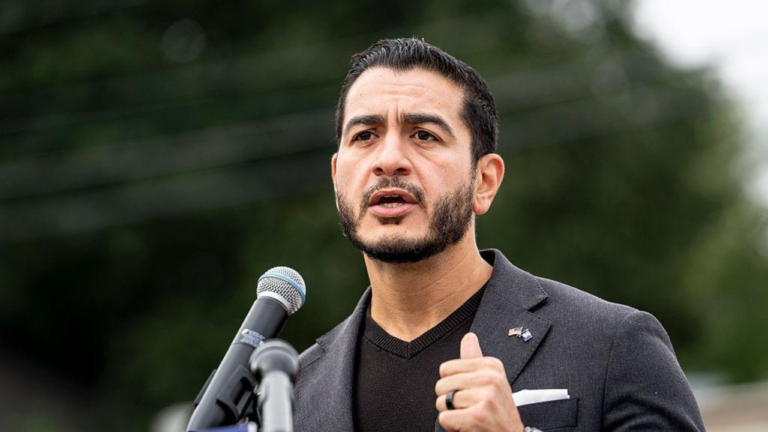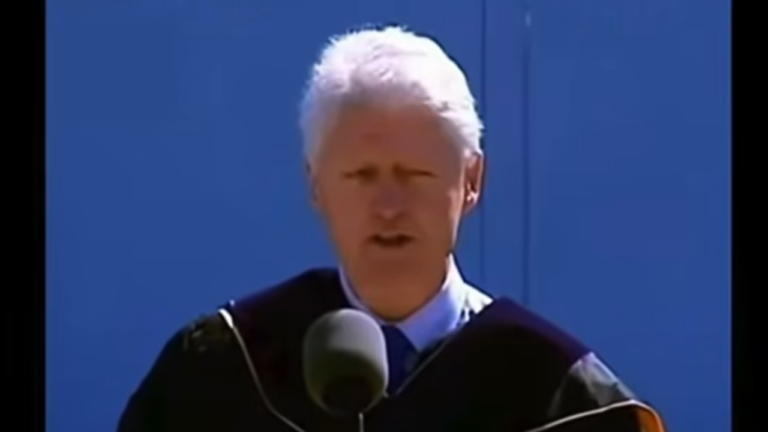
Nearly two decades before Abdul El-Sayed became a U.S. Senate candidate in Michigan, he stood before a graduating class at the University of Michigan and delivered a speech that caught the attention of former President Bill Clinton.
The year was 2007. El-Sayed was a young student preparing to pursue medicine, while Clinton was delivering the university’s commencement address.
After hearing El-Sayed speak about the possibility of overcoming religious and cultural divisions, Clinton offered an unusually personal acknowledgment from the stage.
“I wish every person in the world who believes that we are fated to have a clash of civilizations and cannot reach across the religious divides could have heard you speak today,” Clinton told the graduating class, addressing the student speaker.
“I just wish every person in the world could have heard you speak today.”
The remarks reflected a theme running through the ceremony: the importance of recognizing shared humanity across religious and cultural differences.
For El-Sayed, whose parents were Egyptian immigrants, the day carried particular personal significance. His father was in the audience to watch him address his graduating class.
But another memorable moment came after the ceremony ended.
El-Sayed has since recounted that Clinton approached him, praised his communication skills and suggested that he consider running for public office.
The suggestion initially struck El-Sayed as unrealistic.
“Mr. President, you see my name? People like me don’t get to run for office,” he recalled telling Clinton.
At the time, El-Sayed was planning a career in medicine and public health. He has explained in later interviews that, as a young Muslim American with an Arabic name, he struggled to imagine himself as a viable candidate for elected office.
Clinton’s suggestion nevertheless became a memorable part of his personal story.
El-Sayed went on to study medicine and public health, eventually becoming Detroit’s health director before entering electoral politics.
Now, nineteen years after the graduation ceremony, El-Sayed is a Democratic candidate for the U.S. Senate in Michigan, bringing renewed attention to the exchange.
The historical moment also carries a connection to the political debates surrounding his campaign. Questions about religious identity and belonging remain part of American electoral politics, and El-Sayed has spoken publicly about the prejudice he believes Muslim Americans face.
His commencement message in 2007 emphasized the possibility of change and the responsibility of graduates to believe they could make a difference.
“It’s that we have the audacity to believe. That we can change this world,” he told his classmates, according to the account accompanying the resurfaced footage.
The reference echoed the political language of then-Senator Barack Obama, whose rise to national prominence would soon reshape American politics.
For El-Sayed, the encounter with Clinton is a reminder of how distant elected office once seemed from the career he imagined for himself.
What began as a graduation-day compliment became part of a longer story about public service, identity and the changing possibilities of American political life.
The footage dates to 2007, and Clinton’s remarks should not be interpreted as a new endorsement of El-Sayed’s 2026 Senate campaign.
About the Author