Michigan Democratic Senate candidate Abdul El-Sayed refused to get drawn into a personal feud Sunday after his former primary rival, Rep. Haley Stevens, made the extraordinary decision to endorse his Republican opponent, Mike Rogers, just two days before Election Day.
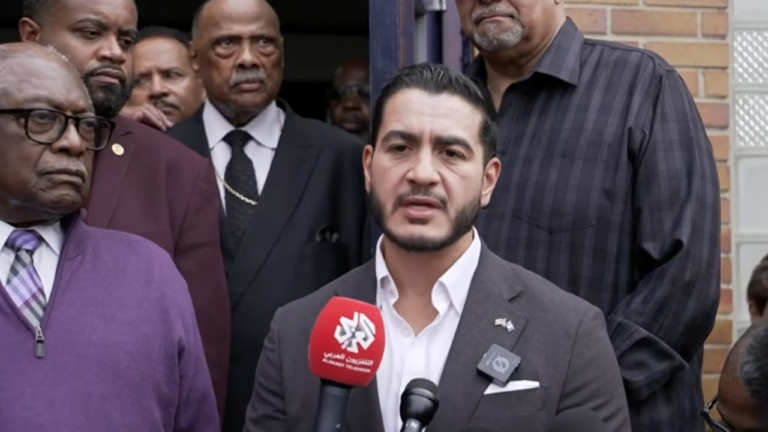
The endorsement sent shockwaves through Michigan Democratic politics, but when reporters approached El-Sayed outside a church event in Detroit, he insisted that struggling families had far more pressing concerns than the dispute dominating political headlines.
“None of this matters,” El-Sayed told reporters.
He pointed toward neighborhoods surrounding the church, describing parents preparing to send their children to aging schools while worrying about groceries and medical bills.
El-Sayed said he wanted reporters to focus on those families rather than the political fallout from Stevens’ decision.
The confrontation came hours after Stevens appeared alongside Rogers at Perfecting Church in Detroit and announced that she would support the Republican in Tuesday’s Senate election.
Stevens, who narrowly lost the Democratic primary to El-Sayed in August, had previously pledged to support the Democratic ticket. Her reversal followed several days of increasingly public disagreements with the nominee.
In a video announcing her endorsement, Stevens said El-Sayed had made clear that she was no longer welcome at his campaign events. She also cited disagreements involving Israel and streamer Hasan Piker, who had campaigned with El-Sayed during the primary.
Stevens maintained that she remained a proud Democrat despite backing Rogers.
The move drew immediate criticism from Democratic leaders and former members of her own staff.
Her longtime chief of staff, Justin German, announced his resignation and said other members of the team had also stepped down. In a public statement, he expressed shock at the endorsement and reaffirmed the staff’s support for El-Sayed.
Michigan Democratic Party Chair Curtis Hertel also condemned Stevens’ decision, arguing that Rogers’ positions were incompatible with the priorities Stevens had previously championed.
Senate Democratic Leader Chuck Schumer joined the criticism as party officials confronted a highly unusual cross-party endorsement in the final hours of a closely watched Senate contest.
El-Sayed, however, sought to move the discussion away from the personal dispute.
Standing outside the Detroit church, he spoke about families who feared that one unexpected illness could leave them unable to pay their bills. He described children attending schools that had changed little in decades and parents struggling to provide everyday necessities.
Those concerns, he argued, were what the Senate campaign should be about.
The episode underscored the tensions that have followed Michigan Democrats since their competitive August primary, particularly over U.S. policy toward Israel and disagreements about the direction of the party.
Rogers, a former Republican congressman endorsed by President Donald Trump, welcomed Stevens’ support. The Republican and Stevens appeared together at a church service Sunday morning.
The Senate contest is being held to replace retiring Democratic Sen. Gary Peters, with both major parties seeking control of the chamber.
For El-Sayed, the immediate challenge was to keep his campaign focused on the economic and healthcare concerns he has emphasized throughout the race.
And with Election Day approaching, he made clear that he did not intend to let his former rival’s endorsement become the defining subject of his final campaign appearances.
About the Author