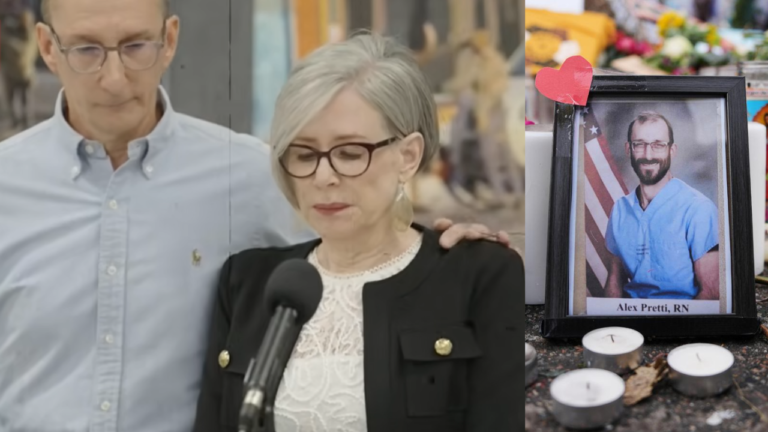
The parents of Alex Pretti, the 37-year-old Minneapolis nurse fatally shot by federal immigration agents in January, have broken their public silence with an emotional demand for justice — accusing the Trump administration of smearing their son’s name and withholding the answers their family has spent months seeking.
Susan and Michael Pretti spoke publicly on October 27, nine months after their son’s death during a federal immigration enforcement operation in Minneapolis.
Their message was deeply personal. They said they never wanted to become public figures or political activists. They wanted their son back. And because that is no longer possible, they want accountability.
“The federal government went on TV and lied about Alex,” Susan Pretti said. “They tried to slander his memory to cover up their crime. Not only was it wrong, it was shameful, unfair, and unacceptable.”
She said the family was determined to challenge the government’s portrayal of their son.
“We want to clear our son’s name. We want the world to understand who Alex really was.”
Pretti, who worked as an intensive care nurse at a Veterans Affairs hospital, was killed on January 24 after an encounter with federal immigration officers.
The shooting sparked widespread outrage, particularly after videos of the confrontation raised serious questions about the administration’s initial description of what happened.
Federal officials had portrayed Pretti as a threat to officers. But publicly available footage challenged key elements of that account, intensifying demands for an independent investigation.
His parents say the government’s response compounded the trauma of losing him.
“We want our son’s killers brought to justice once and for all,” Susan Pretti said.
“Minnesotans said no to this injustice. Americans said no to this injustice. And today we are here begging for the Department of Justice to do what is right to hold the men who murdered our son accountable for what they did.”
Her words were not simply an expression of anger. They were an appeal to the institutions responsible for investigating the fatal use of force by federal agents.
“I ask anyone listening to this, citizens, business leaders, and elected officials, to call on your government to do the right thing.”
The family has spent months seeking information about the investigation and the circumstances surrounding Alex’s death.
Susan Pretti described the emotional cost of that struggle.
“It has been a miserable year for our family,” she said.
“We do not want to be on TV. We are not political activists, nor do we want to become political activists. All we want is justice for Alex.”
Her husband, Michael Pretti, delivered an equally forceful condemnation of the administration’s handling of the case.
“We wish Alex was alive. This administration has taken that away from us,” he said.
“We will no longer stay silent about the actions of the Department of Justice.”
Michael accused federal officials of responding to the family’s requests with indifference and obstruction.
“What we have been treated to is cruelty,” he said.
He specifically criticized officials in the U.S. Attorney’s Office and the Justice Department, saying the family had been unable to obtain basic information despite repeated requests.
“They have shielded Alex’s killers. This is not justice.”
Those are serious accusations from a grieving family. They are not, by themselves, a legal finding that federal officials committed a cover-up or that the agents involved are criminally responsible.
But the questions surrounding Pretti’s death have remained unresolved.
Videos recorded at the scene showed a chaotic confrontation involving federal officers and Pretti, who was carrying a legally possessed firearm.
The footage raised questions about the initial federal narrative, including whether Pretti had threatened agents with his weapon before being shot.
The available recordings became central to public scrutiny of the incident and to calls for investigators to examine the agents’ actions independently.
The case also drew attention to broader concerns about the use of force during the administration’s immigration enforcement operations.
For Pretti’s family, however, the debate is not abstract.
Their son was a nurse who cared for patients, including military veterans. His death left them grieving while simultaneously confronting public allegations about his behavior in the moments before the shooting.
That combination — the loss of a loved one and the battle over how he would be remembered — has shaped their demand for accountability.
The Justice Department has not announced criminal charges against the federal agents involved in the shooting.
A lack of charges does not establish that the shooting was lawful, just as the family’s accusations do not constitute a criminal conviction.
The central questions about the agents’ conduct and any potential criminal responsibility remain matters for investigation and, if charges are brought, the courts.
The Prettis have made clear that they want the federal government to provide answers and that they believe those responsible for their son’s death should face justice.
Their public appeal also places renewed attention on the Trump administration’s responsibility to ensure that investigations involving federal law enforcement are conducted fairly and transparently.
The family has not publicly made a specific demand that Trump or White House adviser Stephen Miller be prosecuted in connection with the shooting.
Their stated demand is for accountability for the officers responsible for their son’s death and for the Justice Department to respond to their concerns.
What made Tuesday’s appearance so difficult to watch was the contrast between the family’s restrained wish to live privately and the extraordinary circumstances that brought them before the cameras.
They did not come to announce a political campaign.
They came to talk about their son.
And after nine months of grief, they are telling the federal government that silence is no longer an option.
About the Author