Donald Trump was delivering a campaign speech in Mississippi on Monday when a heckler interrupted him with an extraordinarily blunt message about his controversial White House ballroom project.
And the president’s response quickly turned the interruption into another political spectacle.
Trump was speaking in Corinth, Mississippi, at a rally supporting Republican Senator Cindy Hyde-Smith ahead of the November 3 midterm elections.
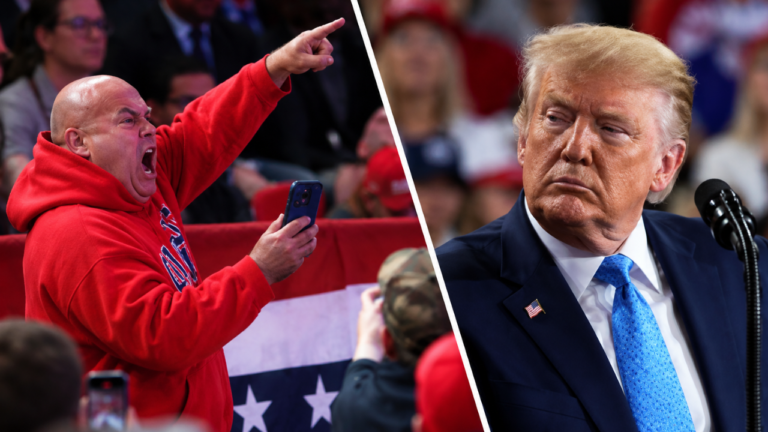
The president had been discussing his administration’s accomplishments and the changes he has made to the White House when a protester shouted from the crowd.
“Shove that ballroom up your fat ass!”
The outburst was directed at Trump’s plans for a massive new ballroom at the White House, a project that has become a frequent target of criticism from Democrats and other opponents.
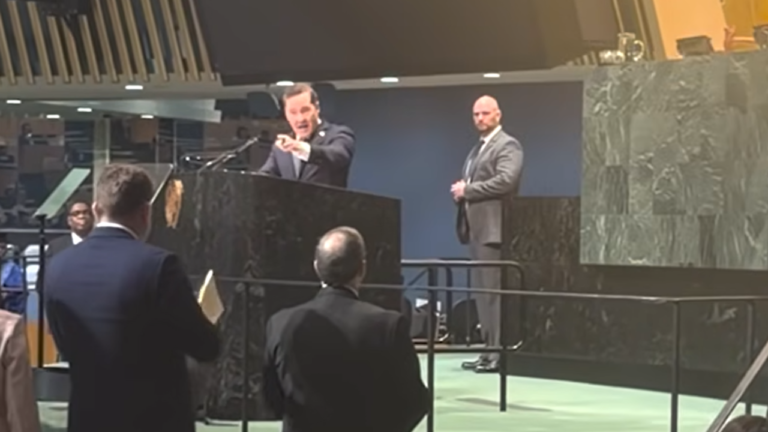
Video from the event captured the interruption as Trump stood at the podium.
The crowd reacted immediately, with some attendees booing the protester while others began chanting “USA!”
Security personnel moved to remove the individual from the rally.
Trump, meanwhile, addressed the disruption from the stage.
“Oh, go home. Go home. Go home,” he said.
But he didn’t stop there.
The president then suggested that protesters attending his events were being paid to cause disturbances.
Trump claimed that demonstrators received $250 and invoked billionaire Democratic donor George Soros, a frequent target of his political attacks.
He offered no evidence that the individual who interrupted his speech had been paid or that Soros had any involvement in the incident.
The interruption came at an awkward moment for Trump, who has spent considerable time defending his White House renovation projects against criticism.
Just days earlier, former President Barack Obama had mocked Trump’s decorating choices during a Democratic campaign rally in Ohio.
“He’s got the White House looking like Saddam Hussein opened a Cheesecake Factory,” Obama joked.
Trump responded to that remark on Monday with an extended attack on Obama’s intelligence and a detailed defense of the work being done at the White House.
Later that same day, at the Mississippi rally, the president returned to the subject of the renovations.
The heckler’s intervention brought the controversy directly into the room.
The proposed ballroom has attracted criticism over its scale, cost and implications for the historic White House complex.
Trump has defended the project as a long-overdue improvement, arguing that the presidential residence needs a proper space for major official functions.
He has also emphasized the importance of maintaining the White House’s architectural features and repairing areas he says have deteriorated.
Critics, however, have questioned whether the president’s priorities reflect the concerns of ordinary Americans.
The issue has become especially prominent during the final stretch of the midterm campaign, when Democrats have sought to contrast Trump’s construction projects with voters’ worries about the economy and the cost of living.
The Mississippi interruption was a particularly vivid example of how that criticism has followed Trump onto the campaign trail.
Rather than a carefully worded political argument, the protester delivered a crude, direct insult that immediately drew attention.
Trump’s response added another layer to the episode.
His suggestion that the protester was being paid echoed a familiar claim he has made about political demonstrations, but there was no evidence presented to support it in this instance.
The rally eventually continued, with Trump returning to his prepared political message.
But the brief interruption provided another viral moment in a week already dominated by debate over the White House makeover.
Obama had turned the renovations into a national punchline.
Now, at a Republican campaign rally, a protester had delivered a far less diplomatic version of the same criticism.
And once again, Trump found himself defending a project that has become an unexpected political liability during the closing days of the midterm campaign.
About the Author