Donald Trump has spent years presenting himself as a president who demands absolute loyalty from the people around him.
But a new controversy involving two of his most important political advisers is testing just how far that loyalty goes — especially when lucrative foreign consulting work enters the picture.
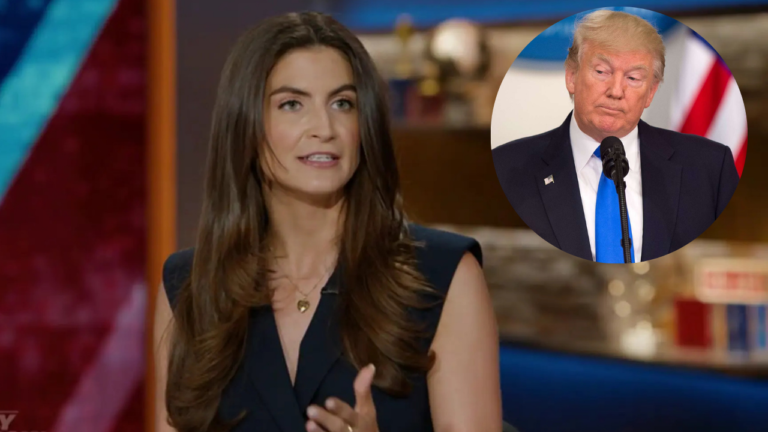
CNN’s Kaitlan Collins put the spotlight on the situation Wednesday night after reports revealed that Chris LaCivita and James Blair, two influential figures in Trump’s political operation, had traveled to Bosnia and Herzegovina to advise the government of Republika Srpska, a Russia-aligned political entity.
The trip reportedly took place just weeks before the November 3 midterm elections, when both men are supposed to be helping Republicans maintain control of Congress.
And Trump’s reaction was anything but consistent.
According to reporting by The New York Times, LaCivita and Blair were paid hundreds of thousands of dollars each to advise the Republika Srpska government on voting-related issues.
LaCivita helped run Trump’s successful 2024 presidential campaign. Blair previously served as White House deputy chief of staff before moving into a leading role with MAGA Inc., the powerful Trump-aligned super PAC financing Republican campaigns.
These are not minor political operatives.
They are among the people entrusted with protecting Trump’s political interests at a moment when Republicans are facing difficult congressional races across the country.
Yet the two were simultaneously involved in a consulting arrangement with a foreign government closely aligned with Russian President Vladimir Putin.
When the story surfaced, Trump initially appeared ready to take action.
In a Truth Social post, the president described LaCivita and Blair as outside consultants and said he did not know who their other clients were.
He then issued a warning.
If their foreign business created a conflict of interest, he said, he would terminate their relationship immediately.
It sounded like the president was drawing a firm line.
But that position did not last long.
Speaking to reporters in the Oval Office later Wednesday, Trump delivered a markedly different assessment.
“They don’t have a conflict,” he declared.
He emphasized that the men were independent consultants rather than White House employees, arguing that they were entitled to work with other clients.
When CNN White House correspondent Alayna Treene pressed him about the timing of their foreign trip, Trump dismissed the concern.
“Well, they’re allowed to do that. They have a lot of clients, and it’s OK,” he said.
“I’m a client of theirs.”
That abrupt shift became a central part of Collins’ coverage.
During her CNN program, The Source, Collins examined how Trump went from publicly threatening to cut ties with the advisers to defending their outside business arrangements.
CNN also reported that Trump had not known about the foreign consulting work until he was briefed on the impending New York Times story.
One source described him as angry about the situation, particularly because the two advisers were reportedly profiting from their association with him during a critical election period.
The political implications extend beyond the president’s personal reaction.
Republika Srpska is one of two main entities within Bosnia and Herzegovina. Its nationalist political leadership has maintained close ties with Moscow, while the United States, European Union and Russia have competed for influence in the region.
That geopolitical context is what makes the advisers’ foreign consulting work particularly sensitive.
And it raises a question that Trump’s explanation did little to resolve: Why were two people playing central roles in his American election strategy simultaneously advising a Russia-aligned government on election matters?
There is no established finding that LaCivita or Blair violated the law, and American political consultants are not automatically prohibited from representing foreign clients.
The controversy concerns potential conflicts of interest, political judgment and transparency — not a proven criminal offense.
Still, the timing has attracted attention.
The two men were reportedly involved in the foreign assignment while helping direct a Republican political operation preparing for one of the most consequential midterm elections of Trump’s presidency.
During the CNN discussion, Democratic Rep. Jamie Raskin of Maryland criticized the broader relationship between Trump’s political circle and Russia-aligned interests.
Raskin argued that the controversy should be viewed through the larger question of whether the administration is adequately separating public responsibilities from private financial relationships.
The criticism came as Republicans were already facing pressure over economic conditions, the war with Iran and Trump’s increasingly aggressive midterm campaign schedule.
Trump’s defenders have argued that outside consultants commonly maintain multiple clients and that foreign consulting work, by itself, does not establish misconduct.
That distinction matters.
But it also leaves the central political contradiction intact.
Trump initially suggested that the advisers’ foreign work might be serious enough to justify terminating them.
Hours later, he insisted there was no conflict.
And his explanation rested largely on the fact that the men were not formal White House employees.
For Collins, the story illustrated how quickly the president’s position changed once questions turned toward two of the political professionals closest to his reelection and midterm operations.
The episode also highlights the unusual arrangement surrounding Trump’s political machinery.
Although Blair and LaCivita operate outside the White House, their influence over Republican election strategy remains substantial.
Blair’s work with MAGA Inc. places him at the center of a massive fundraising and campaign-spending operation. LaCivita remains one of the best-known strategists in Trump’s political orbit.
Their decisions can affect the direction of Republican campaigns nationwide.
That is why the foreign consulting arrangement has become more than a story about two political advisers taking on another client.
It is now a story about influence, money, foreign political interests — and a president who appeared to change his mind almost as soon as the controversy reached his desk.
With the midterms approaching, the questions are unlikely to disappear simply because Trump says he sees no conflict.
And the contrast between his initial warning and his subsequent defense is now part of the public record.
About the Author