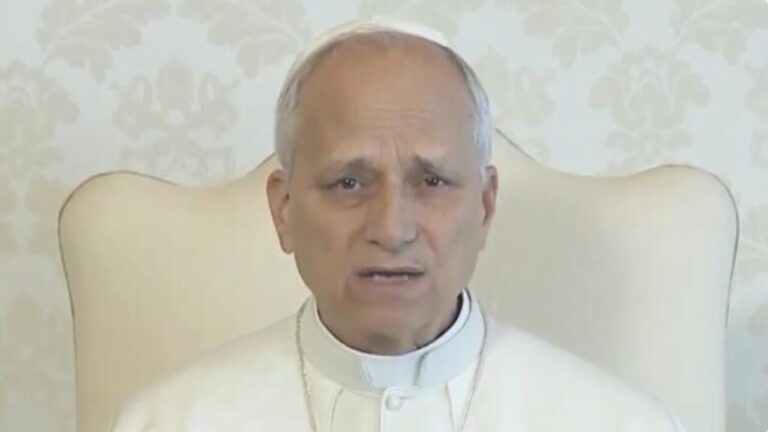
In a strong speech on Palm Sunday, March 29, 2026, Pope Leo strongly criticized war, saying that violence cannot be used as a reason to follow faith and that those who fight are not accepted by God. His speech, given as part of the start of Holy Week, focused on the image of Jesus as a symbol of peace, especially in contrast to the wars happening around the world today.
Using the story of Jesus’ suffering, the pope described Jesus as someone who chose peace even when others were being cruel.
He said, “As Jesus walks the Way of the Cross, we place ourselves behind him, following in his footsteps,” showing how Jesus’ pain was for everyone and was a gift of love. He pointed out that Jesus remained calm and peaceful while others were causing violence, showing a clear difference between giving up your life and fighting back.
King of Peace. He did not arm himself, or defend himself, or fight any war. He revealed the gentle face of God, who always rejects violence. Rather than saving himself, he allowed himself to be nailed to the cross, embracing every cross borne in every time and place throughout…
— Pope Leo XIV (@Pontifex) March 29, 2026
The pope strongly rejected the idea of using religion to justify war.
He said, “This is our God: Jesus, King of Peace, who rejects war, whom no one can use to justify war. He does not listen to the prayers of those who wage war, but rejects them, saying: ‘Even though you make many prayers, I will not listen: your hands are full of blood.’” This quote from the Book of Isaiah shows that violence makes people lose any right to pray to God.
The message also tied Jesus’ suffering to the people currently suffering because of war.
It said that “in his wounds, we see the hurts of so many women and men today,” and that Jesus’ last words reflect “the weeping of those who are crushed” and “the painful groans of all those who are oppressed by violence.” He ended by asking people to show mercy and love, saying, “God is love! Have mercy!”
The pope also mentioned areas where war is happening, especially Christians in the Middle East.
He said they are “suffering the consequences of a brutal conflict” and often can’t fully celebrate Holy Week. He added that their situation “challenges all our consciences,” asking people to pray for those affected and to find ways to bring peace and reconciliation. He also asked for prayers for people working at sea and for those who have died traveling by sea recently.
This speech happened during a time of increasing military actions, including the ongoing U.S.-led Operation Epic Fury against Iran’s military targets.
This operation has included over 11,000 flights and attacks on many important places like missile sites, command centers, and ships, with over 150 Iranian vessels damaged or destroyed. It has also caused the death of Iran’s supreme leader and many other high-ranking officials. Although the pope didn’t mention the operation by name, his strong words against war and his refusal to accept any reason for it strongly opposed the ongoing military actions.
About the Author