Minnesota took legal action against the Trump administration on Tuesday, claiming that federal authorities have been blocking access to evidence related to the shootings of several Minneapolis residents by federal agents.
The lawsuit was filed in the U.S. District Court for the District of Columbia and lists the Department of Justice, Department of Homeland Security, Attorney General Pam Bondi, and former DHS Secretary Kristi Noem as defendants.
Earlier this month, Noem announced she was leaving her job, and President Trump nominated then-Senator Markwayne Mullin (R-OK) to replace her. Mullin’s nomination was confirmed by the Senate this week, and the complaint will likely be updated to replace Noem’s name with Mullin’s.
Trump’s immigration policies have caused widespread criticism, leading to protests and legal challenges across the country.
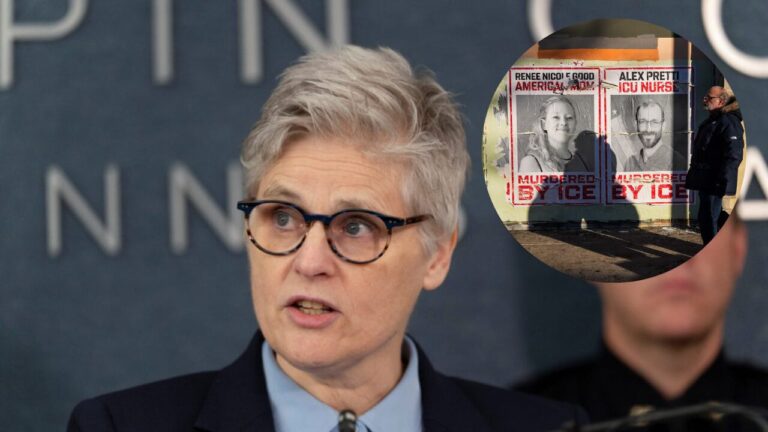
Minneapolis has been at the center of this dispute, especially after two deadly shootings of U.S. citizens: Renee Good was shot by ICE agent Jonathan Ross on January 7, and Alex Pretti was shot by Border Patrol agent Jesus Ochoa and Customs and Border Protection officer Raymundo Gutierrez on January 24.
After Good’s shooting, the Minnesota Bureau of Criminal Apprehension (BCA) accused the FBI of blocking access to evidence, leading it to “reluctantly withdraw from the investigation.”
In a 43-page complaint, Minnesota claims that federal authorities have continued to deny access to evidence in the Good and Pretti shootings, as well as the Jan. 14 shooting of Julio Cesar Sosa-Celis, a Venezuelan immigrant who was shot in the leg by an ICE agent and survived.
In all three cases, the initial stories told by the federal government were challenged by witnesses, videos, and photos from the scenes.
Two ICE agents have been suspended for their roles in the Sosa-Celis shooting, and a criminal probe has been launched into whether they lied to a jury.
The complaint explains that Minnesota investigators expected cooperation from federal authorities, as is standard in such situations.
Instead, the federal agencies blocked their efforts.
At the scene of the first two incidents — the killing of Renee Good and the shooting of Julio Sosa-Celis — federal agents initially indicated that they would work with Minnesota authorities and share relevant information. State investigators thus began their work in reliance on that understanding.
But in both cases, federal agents quickly reneged on their pledges to cooperate. Instead of sharing information, federal authorities took exclusive possession of evidence that had been collected, and they denied Minnesota investigators access to key information.
At the scene of the third shooting — the killing of Alex Pretti —federal immigration officers physically blocked investigators of the Minnesota Bureau of Criminal Apprehension (“BCA”) from accessing the scene. That physical obstruction persisted even after state officials obtained a judicial warrant authorizing access to the scene. As with the previous two shootings, federal authorities took exclusive control of evidence and refused state and local authorities access to even the most basic information related to the incident – such as the identities of the involved officers.
This was called “unprecedented noncooperation,” especially since the requests from Minnesota were largely ignored or denied, showing a policy that has prevented the state from getting timely access to evidence relevant to its criminal investigations.
The lawsuit asks the court to help secure access to the evidence needed to investigate these shootings and ensure that Minnesota can carry out its responsibility to determine if federal officers committed crimes on its soil.
It also asks the court to declare the federal policy of noncooperation unlawful, set it aside, and order the federal government to comply with the state’s investigative needs. This includes specifically stating that the actions of the DOJ and DHS violated the Tenth Amendment to the U.S. Constitution, declaring the denials of Minnesota’s requests as unlawful, and forcing the federal government to provide the state with access to evidence and materials from the Good, Pretti, and Sosa-Celis shootings, as well as awarding costs and attorneys’ fees.
The complaint argues that what is at stake is not just the state’s access to crucial evidence but also a core principle of the U.S. Constitution: the authority and responsibility of the states to investigate crimes within their borders.
About the Author