Yesterday, during a House Judiciary Committee hearing, a single photograph changed the entire narrative.
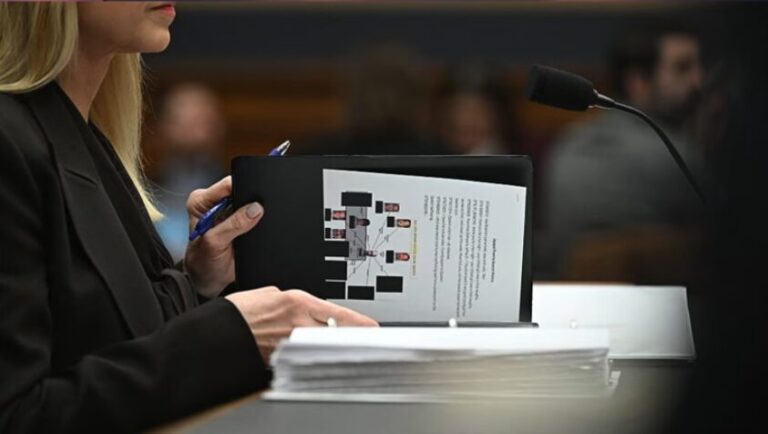
Getty Images photographer Roberto Schmidt was covering five hours of testimony as Attorney General Pam Bondi answered questions about the Epstein files. It looked routine — lawmakers debating, cameras clicking, staff shuffling papers.
But when one image was zoomed in, something unusual appeared inside Bondi’s binder: a page labeled “Gyipol Primila search history.” What appeared visible on that page were specific document numbers from the Epstein Files Transparency Act database — allegedly the exact files Congresswoman Pramila Jayapal had searched just two days earlier while reviewing materials at the Justice Department.
That single image has now sparked serious allegations.
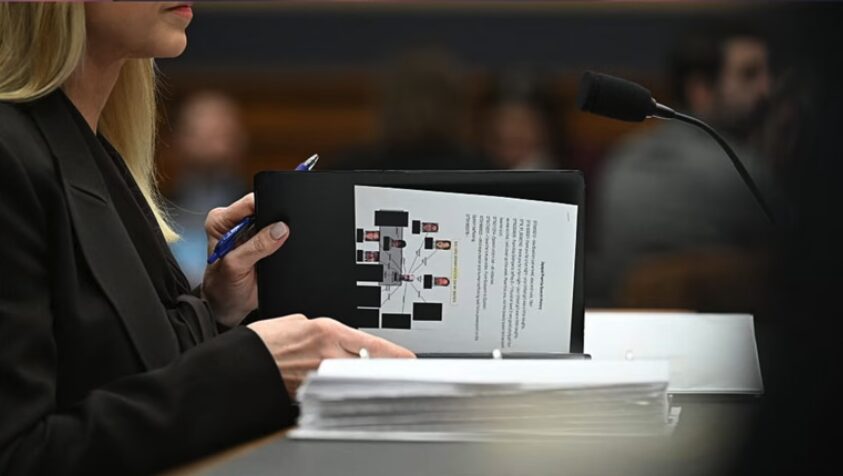
Democratic members of Congress claim the Department of Justice may be tracking what lawmakers search in the Epstein database — monitoring which documents they access and potentially using that information to prepare counterattacks for hearings. If true, they argue, it would raise major separation-of-powers concerns.
Under the bipartisan Epstein Files Transparency Act — co-written by Republican Thomas Massie and Democrat Ro Khanna — members of Congress are allowed to review unredacted files at a DOJ satellite office. They log in, search the system, read documents still hidden from the public, and take handwritten notes. Electronic devices are not allowed. The law was designed to strengthen congressional oversight of the executive branch.
The question now being raised: Was that oversight quietly monitored?
Congresswoman Jayapal stated publicly that it would be “totally inappropriate and against the separation of powers” for the DOJ to surveil members while they conduct oversight. Other lawmakers, including Zoe Lofgren and Jamie Raskin, echoed concerns that tracking congressional searches would be improper.
The hearing itself quickly escalated.
Lawmakers pressed Bondi on the handling of the Epstein document release, including redactions and the exposure of victim information. Republican Congressman Massie sharply criticized the DOJ for releasing an email from victims’ lawyers that contained names they explicitly asked not to make public. He called it “literally the worst thing you could do to the survivors.”
At one point, Massie held up a whiteboard and wrote “0” — referring to the number of Epstein co-conspirators indicted so far.
Representative Raskin asked how many co-conspirators had been indicted. The exchange devolved into overlapping arguments. When pressed again, Bondi pivoted to discussing stock market performance, saying the Dow and other indexes were reaching record highs — a response that left many in the room visibly stunned.
Survivors of Jeffrey Epstein were seated directly behind Bondi during the hearing. Lawmakers asked whether the DOJ had met with them. According to statements made during the session, all present survivors indicated they had not. Requests were made for Bondi to turn and address them directly. She declined.
The broader controversy now centers on three major questions:
• Did the DOJ track congressional database searches?
• Why were some powerful names reportedly redacted while victim information was exposed?
• Why have no co-conspirators been indicted so far?
The photograph taken by Roberto Schmidt has become the focal point of the debate. Democrats argue it suggests monitoring. Republicans involved in drafting the transparency law argue victims were mishandled. The Justice Department has not publicly confirmed any surveillance of congressional search activity.
If lawmakers’ allegations are accurate, the implications would be serious — potentially involving constitutional boundaries between branches of government. If the allegations are not accurate, the photo will likely be scrutinized for context and explanation.
What is clear is this: a routine hearing turned into a political firestorm because of a single zoomed-in image.
And now, both parties are demanding answers.
About the Author