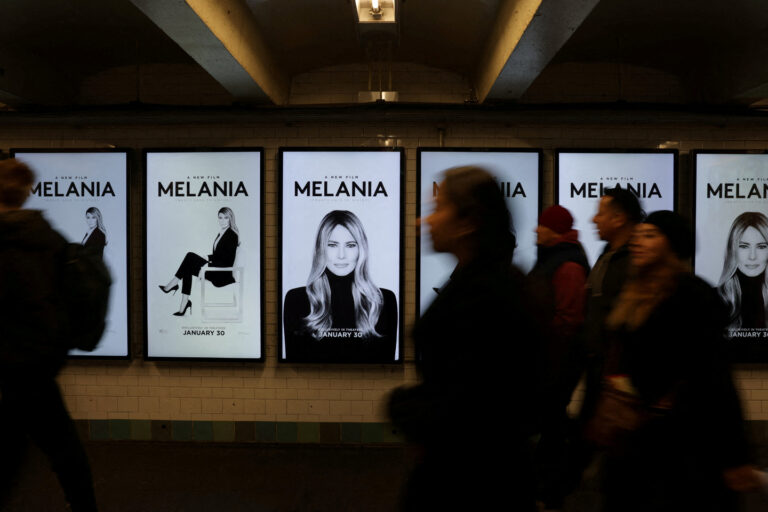
Moviegoers are losing interest in Melania.
The first lady’s documentary, named after her, kept dropping in popularity during its third weekend, with a 62.3 percent drop in viewers, according to IMDbPro data.
This means the film is expected to make only about $15.4 million in total, far below the $40 million Amazon paid to buy it and an extra $35 million for its promotion.
The documentary was directed by Brett Ratner, who has come under criticism for his connections to Jeffrey Epstein and sexual misconduct claims.
Last week, as Melania’s film saw an even bigger 67 percent drop in ticket sales, Kevin Wilson, head of Amazon MGM distribution, said the film’s “strong theatrical performance” was “a critical first moment that validates our holistic distribution strategy, building awareness, engagement, and provides momentum ahead of the film’s eventual debut on Prime Video.”
Amazon MGM says the film will do well on streaming to make up for its poor box office results.
The studio expects to recoup some of the costs when it streams on Prime Video through ads and new Prime subscriptions, though no streaming date has been set yet.
Wilson explained that both theatrical and streaming offer unique value and help the film’s overall impact.
Exit polls showed people are interested in watching the documentary again on Amazon Prime Video as well as watching the related docuseries.
At her black carpet premiere at the Kennedy Center last month, the 51-year-old first lady hinted that a docuseries would follow her film.
“We are still producing it, and that will be completely new footage,” she told reporters.
“We have some scenes that are not in the movie. We will have in a few months a docuseries, so people will see much more documentary.”
As Variety noted, Amazon has enough money to afford big losses on its Melania project—so its main goal wasn’t to make money.
“Whether or not people like it, the value of these movies is different for our business model,” Wilson told the outlet in 2024.
“We’re getting a massive marketing campaign that’s being paid for before the film gets to streaming. If we can put these movies out theatrically and cover our P&A (print and advertising) costs, why wouldn’t we?”
About the Author