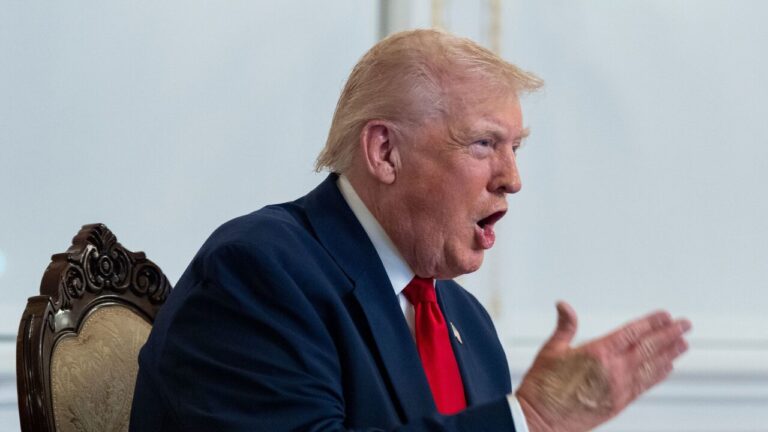
President Donald Trump’s strong warning against Iran seems to be backfiring. On Saturday night, the 79-year-old leader said he would destroy Iran’s power plants if Iran didn’t stop blocking the Strait of Hormuz within 48 hours.
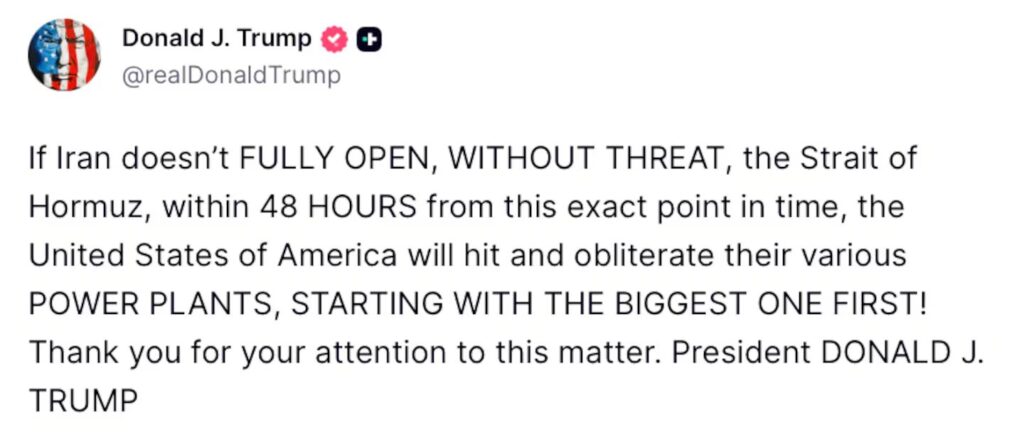
Iran responded quickly, but not in the way Trump wanted.
Iran’s parliament speaker, Mohammad Baqer Qalibaf, said on Sunday that Iran would permanently damage the key infrastructure of its Middle Eastern neighbors, including oil and energy facilities, if Trump carried out his threat to attack Iran’s power grid, according to Reuters.
Qalibaf said such an attack would keep oil prices high for a long time.
Trump is now trying to handle the economic effects of the war he started more than three weeks ago. Gas prices in the U.S. have gone up by about 30% because Iran is blocking the Strait of Hormuz, a major waterway that moves up to one-fifth of the world’s oil.
Trump’s warning was meant to force Iran to back down from the strait, but it appears to have done the opposite.
Iran’s Islamic Revolutionary Guard Corps said they would block the strait if the U.S. attacks their power plants. “The Strait of Hormuz will be completely closed and will not be opened until our destroyed power plants are rebuilt,” the Guards said in a statement, Reuters reports.
The risk of mutual attacks on civilian infrastructure could make global markets even more unstable and increase fears that American allies in the Middle East could get caught in the conflict.
Attacks on key infrastructure would be very damaging to Iran’s Gulf neighbors, who use much more electricity per person than Iran and rely heavily on energy-intensive desalination plants for most of their drinking water.
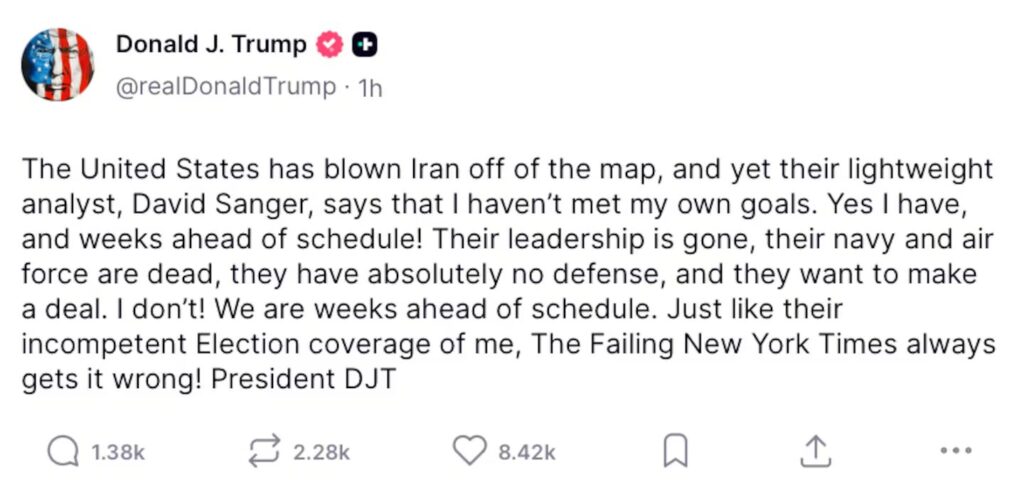
Trump’s warning started off confusing.
It came just an hour after he claimed the U.S. had “blown Iran off the map” and that the country had “no defense” and wanted to “make a deal.” He said, “I don’t!”
The situation also raised legal concerns because attacking civilian infrastructure, like power plants, can be seen as a war crime under international law.
The Geneva Conventions forbid attacks on “objects indispensable to the survival of the civilian population.”
Trump has kept saying the U.S. is “very close” to achieving its changing war goals, even as more troops are being sent to the region and attacks continue.
The war has resulted in the deaths of 13 U.S. service members and over 1,000 civilians in Iran.
About the Author