
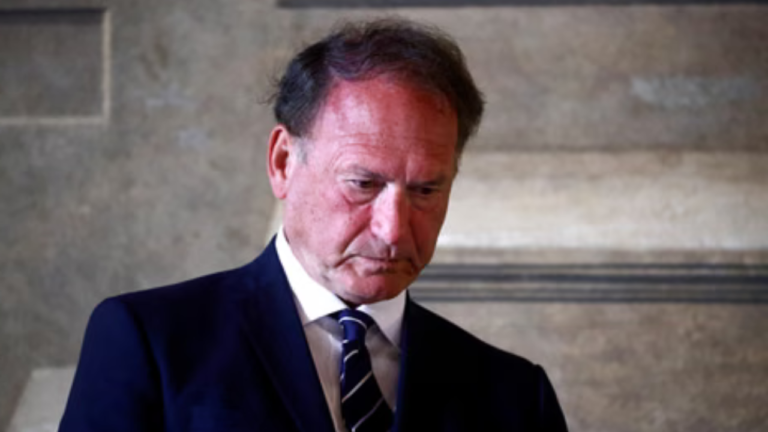
Supreme Court Justice Samuel Alito delivered a stark warning about the power Congress holds over the nation’s highest court, raising the possibility that lawmakers could use federal funding to severely disrupt its operations.
Speaking at a Federalist Society gathering on November 12, Alito described what he sees as a serious threat to judicial independence: the ability of Congress to exert pressure on the judiciary through its control of federal spending.
His warning came as Washington prepares for a new Congress and the prospect of heightened scrutiny of the Supreme Court.
“Congress can turn off the lights at the Supreme Court and stop everything from happening if they want to defund their activities,” Alito said.
“And there are many, many, many other things that they can do, or at least try to do.”
The remarks highlighted a fundamental tension within the American system of government.
Although the Supreme Court is a separate constitutional branch, Congress exercises significant authority over federal appropriations, including funding for the judiciary’s operations.
Alito argued that this financial power makes protecting judicial independence especially important.
“So, it is important to preserve the independence of the judiciary,” he continued. “If that is eliminated, then the Constitution as adopted in 1789 will no longer be the same.”
The justice’s comments arrive at a politically sensitive moment for the Court, which has faced sustained criticism over controversial decisions involving abortion rights, presidential immunity and the balance of power between the federal government and the states.
Critics of the Court’s conservative majority argue that those decisions have weakened important legal protections and expanded presidential authority.
Supporters of the Court’s decisions, however, maintain that the justices are interpreting constitutional and statutory limits rather than making policy judgments.
Alito’s warning also raises an important distinction between congressional oversight and interference with the judiciary.
Congress has authority over federal spending, but that authority is not unlimited. Article III of the Constitution protects federal judges’ compensation from being diminished while they remain in office.
Cutting the Court’s operating budget would therefore raise constitutional and practical questions beyond an ordinary dispute over annual appropriations.
The possibility of restricting judicial funding has become part of a broader discussion about how Congress might respond to a Supreme Court whose decisions have generated intense political opposition.
Proposals for changing the Court have included judicial term limits, enforceable ethics requirements and changes to the number of justices. Each approach raises different legal and constitutional considerations.
But Alito did not announce that Congress had taken action to defund the Court, nor did the quoted portion of his speech identify a specific Democratic proposal to do so.
Instead, he described the broader leverage Congress possesses over another branch of government.
That distinction matters as political debate over the Court intensifies.
For those concerned about judicial independence, Alito’s comments underscore the danger of allowing political majorities to use financial pressure against judges.
For those advocating Supreme Court reform, the remarks draw attention to the considerable authority Congress already possesses within the constitutional system.
The central question is where legitimate legislative oversight ends and unconstitutional interference with judicial independence begins.
Alito’s warning offered no resolution to that debate.
But his blunt description of Congress’s power — including the possibility of turning off the lights at the Supreme Court — has placed that constitutional tension squarely in the political spotlight.
SOURCES
About the Author


The Supreme Court is supposed to be impartial. They showed that they are anything but impartial, especially when they granted trump with inlimited power, and he’s thrown it in our faces, ever since then. The Supreme Court is supposed to operate within the confines of the Constitutional limitations.