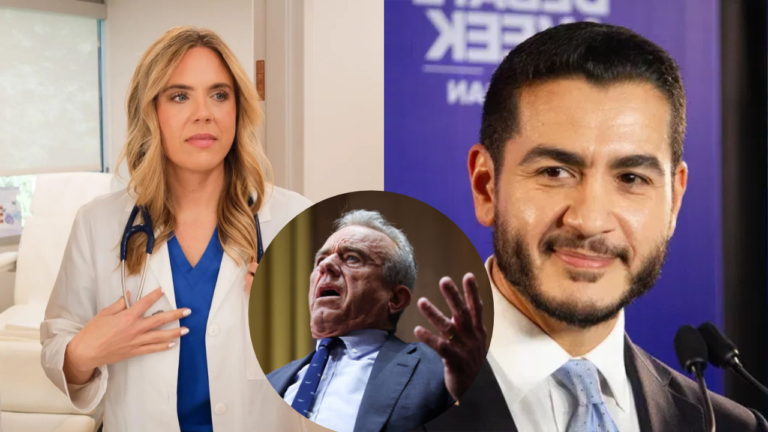
Health Secretary Robert F. Kennedy Jr. could face tougher scrutiny from Capitol Hill when two newly elected Democratic senators with extensive medical backgrounds take office in January.
Dr. Abdul El-Sayed, elected in Michigan, and Dr. Annie Andrews, elected in South Carolina, are both preparing to enter the Senate after the November midterms. Their victories bring two health professionals into Congress at a time when Kennedy’s vaccine policies and management of federal health agencies are drawing criticism.
Andrews, a pediatrician and former professor at the Medical University of South Carolina, has already made clear that she wants Kennedy held accountable.
During her campaign, she pledged to “lead the charge to impeach and remove RFK Jr.”
The issue is particularly personal for Andrews. Her home state experienced a major measles outbreak, and she has repeatedly challenged Kennedy’s influence on vaccine confidence.
In an interview with MS NOW’s Chris Hayes following her election victory, Andrews said she wanted to use congressional oversight to examine Kennedy’s record.
“I want to hold RFK Jr. accountable for the damage that he has done to America’s public health system,” she said.
Andrews has described Kennedy as her professional “archnemesis,” saying his nomination to lead the Department of Health and Human Services helped motivate her Senate campaign.
El-Sayed brings a different public health background to Washington. A physician with a doctorate in public health, he previously served as Detroit’s health director and taught epidemiology at Columbia University.
His experience in public health administration could provide another perspective during congressional debates over vaccination, disease prevention and the federal government’s health priorities.
The election of the two Democrats comes as their party prepares to exercise greater oversight of the Trump administration. Congressional committees can request documents, investigate agency decisions and question senior officials during hearings.
Whether El-Sayed and Andrews will serve on committees responsible for overseeing Kennedy remains undecided. No joint hearing involving the two senators and the health secretary has been announced.
For Andrews, however, the issue is already a stated priority. She campaigned on challenging Kennedy’s leadership and has repeated that commitment since winning her Senate race.
Her arrival in Washington, alongside another physician with a background in public health, adds two new voices to the debate over Kennedy’s leadership of the nation’s health agencies.
About the Author