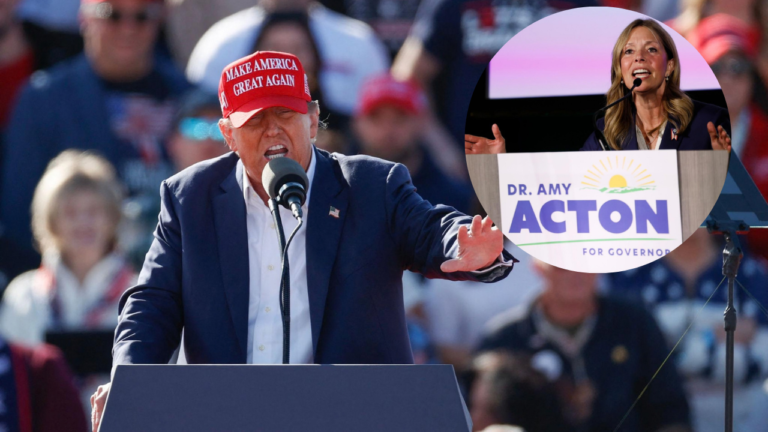
President Donald Trump made a strong and angry statement saying he would bomb Iran’s power plants and bridges if they didn’t open the Strait of Hormuz by Tuesday. He called it “Power Plant Day” and “Bridge Day” and said it would be a big event. He told people to “open the F–kin’ Strait” or else they would be living in “Hell.” He added, “Just watch!” and ended the message with “Praise be to Allah.”
In another post, Trump clarified that the deadline was 8 p.m. Eastern Time on Tuesday.
In an interview with Fox News, Trump said he was talking with Iranian leaders and felt there was a “good chance” of a deal by Monday.
He said if they didn’t agree quickly, he might “blow everything up and take over the oil.”
Trump has made similar threats before, but has often delayed or changed the deadlines after claiming progress in talks with Iran.
According to international law, attacking places that are important for ordinary people’s lives is not allowed and could be considered a war crime.
The law also says that any harm to civilians from military strikes shouldn’t be more than needed for a military advantage.
Destroying power plants could lead to big blackouts, affect hospitals, water treatment centers, and food supplies.
Agnes Callamard, the head of Amnesty International, called Trump’s message “revolting.”
She said that Iranian civilians would be the first to suffer from the destruction of power plants and bridges, without heat, light, water, or the ability to move or escape, which would harm their right to life.
The Strait of Hormuz is a narrow waterway in the Persian Gulf that has been closed to shipping by Iranian attacks since February 28, when the U.S. and Israel attacked Iran, killing Supreme Leader Ali Khamenei.
Since then, Iran has attacked U.S. bases in the Gulf, important infrastructure, and has slowed shipping in the Strait.
This has caused a global shortage of oil and energy, and made gas prices in the U.S. go up a lot.
Iran has threatened an energy war in response.
Iran’s Parliament Speaker, Mohammad Baqer Qalibaf, said that if the U.S. attacked Iran’s power plants again, Iran would attack U.S.-linked energy facilities in the Gulf and other parts of the region. Iran’s military command repeated this threat on Sunday.
A key advisor to Iran’s new Supreme Leader, Mojtaba Khamenei, also warned that Iran could close another important waterway, the Bab al-Mandab Strait.
He said that if the U.S. repeated its mistakes, it would realize that it could disrupt global energy and trade with a single action.
Yemen’s Houthi movement, which is allied with Iran, joined the regional conflict last month.
While Iran has disrupted global markets by blocking the Strait of Hormuz, the Houthis had a big impact on global shipping between November 2023 and January 2025 by attacking over 100 merchant ships in the Red Sea as a show of support for Palestinians during the Gaza war.
Thomas Juneau, a professor at the University of Ottawa, said that if the Houthis attacked shipping in the Red Sea again, it could greatly affect the global economy.
He said that targeting the Bab al-Mandab Strait could increase the impact of the war on oil and gas prices and the global economy.
Attacks on the Red Sea and the Bab al-Mandab Strait could also disrupt shipping through the Suez Canal, which handles about 22% of the world’s container trade each year.
A low-level energy war may have already started.
Israel struck a major petrochemical plant in the Iranian city of Mahshahr on Saturday.
Hamed Shams, who works for the oil ministry’s petrochemical industry, said the attack targeted infrastructure that supplies electricity to the petrochemical plant and to 500,000 people in Khuzestan Province in the summer.
Israeli Prime Minister Benjamin Netanyahu called the plant part of Iran’s “money machine,” which funds its “war of terror” against Israel and the world.
He said, “We will continue to hit them, as I promised.”
Iran responded on Sunday by attacking power plants and a petrochemical plant in Kuwait.
Kuwait’s Ministry of Electricity also said a water desalination plant was targeted. Bahrain’s official news agency said an Iranian drone attack caused a fire at one of the country’s national oil company’s storage facilities.
About the Author